




While Türkiye resists ethnic fragmentation across its borders, a subtle shift in rhetoric and policy at home suggests a quiet reimagining of its own nationhood. This contradiction reveals not just a strategic paradox—but a foundational challenge to the very principles of the Turkish Republic.
Türkiye presents itself as one of the most outspoken opponents of redrawn borders and identity-based fragmentation in its region. From northern Syria to western Iraq, the Eastern Mediterranean to the South Caucasus, Ankara has consistently denounced federalism, ethnic autonomies, and sectarian enclaves as existential threats to regional order. The principle of indivisibility—of states, of sovereignty—has long stood as a cornerstone of Türkiye’s foreign policy.
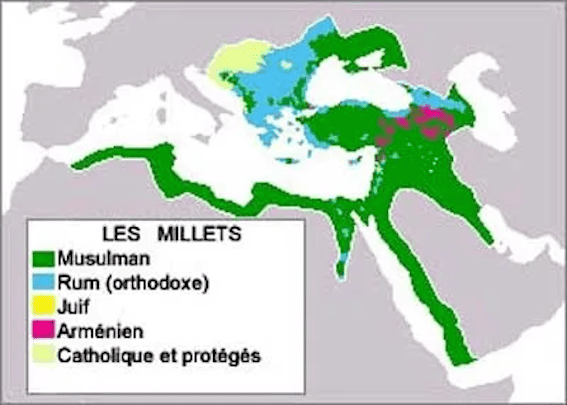
Yet at home, a more ambiguous evolution is taking shape. President Erdoğan’s recent rhetoric celebrating the co-existence of “Turks, Kurds, and Arabs” within Türkiye, coupled with renewed references to cultural rights and the revival of a softened Kurdish opening, has triggered a wave of concern. Critics argue that this signals a quiet departure from the Republic’s founding ideals of civic unity and equal citizenship—toward an identity-based framework evocative of the Ottoman millet system.
The paradox is sharp: Türkiye rejects ethnically-driven decentralization across its borders while experimenting with a version of it within its own. This contradiction is not merely theoretical; it marks a potential turning point where Türkiye’s domestic and foreign policies may become ideologically incompatible—risking the coherence of the very Republic it seeks to defend.
Israel’s new security doctrine: Redrawing borders through Syria
Israel’s policy toward Syria is no longer confined to deterrence. Recent operations—stretching from Suwayda to Damascus, and from Daraa to Qamishli—demonstrate a strategic objective: to fragment Syria along ethnic and sectarian lines and to create smaller, governable enclaves that align with Israel’s long-term security architecture and regional ambitions.
In southern Syria, Israel’s interventions in Druze-majority regions are framed as humanitarian acts to “protect minorities.” In reality, they resemble the creation of a pliant buffer zone—much like the alignment with Maronite Christians in Lebanon during the 1980s. In the northeast, its support for Kurdish autonomy fits within its longstanding “alliance of minorities” doctrine, designed to dilute Arab nationalist and Islamist influence by empowering historically marginalized groups. In the center, the aim is clear: to keep Damascus weak, divided, and unable to reassert regional authority.
What is most notable is that Israel no longer seeks only to secure its borders; it seeks to reshape the internal political architecture of its neighbors. As its military footprint expands, so too does its effort to entrench ethnic enclaves and dismantle the vision of a unified Syrian state.
Its talk of a “federal solution” is seen by many—especially in Ankara—as a diplomatic pretext for legitimizing partition. For Türkiye, this is not merely a violation of Syrian sovereignty; it is a direct assault on regional stability and a test balloon for similar fragmentation elsewhere.
The United States: Strategic ambiguity or tacit endorsement?
The United States has embraced a cautious yet calculated posture in the region. While officially advocating for Syria’s unity and inclusive reconstruction, its silence in the face of Israeli airstrikes and its ongoing engagement with Kurdish-led autonomous administrations tell a different story.
During President Trump’s second term, Washington has doubled down on a low-cost, influence-heavy approach: avoiding direct entanglement while giving close allies like Israel significant operational space. For Ankara, this is not benign neutrality—it is tacit complicity.
The refusal to condemn Israel’s deepening military incursions, and the absence of a clear stance against de facto partition plans, have further strained Türkiye’s trust in Washington. The continued collaboration with the PYD/YPG, groups Ankara equates with the PKK, reinforces the perception of a double standard.
To Türkiye, a fragmented Syria is more than a diplomatic failure—it is a direct national security threat. It would mean a prolonged security vacuum on its border, the rise of non-state actors, and the institutionalization of ethnic cantonization—an outcome Türkiye has fought to prevent for over a decade.
In this context, America’s carefully choreographed ambiguity is not a balancing act—it is part of the destabilizing momentum sweeping the region.
Iran’s decline: From regional vanguard to strategic liability
Iran, once the ideological and logistical backbone of the so-called “Axis of Resistance,” is now undergoing a multidimensional retreat. Its expansive military infrastructure in Syria—painstakingly developed over years to project influence from Tehran to the Mediterranean—has been systematically dismantled by Israeli airstrikes. Key IRGC commanders have been eliminated, Hezbollah supply routes disrupted, and Iran’s strategic foothold—especially in southern Syria—significantly weakened.
At home, the situation is deteriorating rapidly. The Iranian economy is in free fall, paralyzed by sanctions and deepened by chronic mismanagement. Over 1.5 million Afghan refugees have been expelled in a campaign international observers call scapegoating. Daily protests erupt in Kurdish, Baloch, and Azeri regions. Executions and mass arrests are surging. The revolutionary spirit that once animated the Islamic Republic has been hollowed out—replaced by authoritarianism without legitimacy.
Diplomatically, Iran is increasingly isolated. Nuclear negotiations with the West have collapsed. Nominal allies like China and Russia are hedging, expanding relations with Gulf states while distancing themselves from Tehran. Iran’s influence in Iraq is fading, and Hezbollah—its most powerful proxy—is under mounting pressure.
For Türkiye, this presents a complex equation. On the one hand, a weakened Iran reduces ideological rivalry and geopolitical competition. On the other, the power vacuum is quickly being filled by actors and agendas—state and non-state—that may conflict with Türkiye’s strategic interests. The risk is not peace, but chaos. And instability, not relief, may be the outcome of Iran’s regional retreat.
The millet system debate revisited: Is Türkiye’s civic identity at risk?
Even as Türkiye resists foreign-imposed fragmentation in Syria, an internal debate is growing louder. President Erdoğan’s recent references to the unity of “Turks, Kurds, and Arabs” appear on the surface to promote coexistence. Yet many interpret this rhetoric as signaling a shift away from the Republic’s civic, unitary foundation toward a more identity-based political vision.
These statements have emerged alongside revived discussions of a new Kurdish opening, softer language around cultural rights, and renewed informal contacts with former HDP-linked figures. Taken together, they suggest Türkiye may be inching—deliberately or opportunistically—toward a political configuration echoing the Ottoman millet system.
That imperial system granted religious and ethnic communities separate legal and administrative frameworks, with relative autonomy. While it enabled coexistence for a time, it also hardened communal identities and ultimately contributed to imperial collapse. Resurrecting it in the guise of modern inclusivity risks institutionalizing division within the heart of the Republic.
Critics argue that Erdoğan is not promoting reconciliation but exploiting identity politics to entrench power. Speculation grows that constitutional reforms could pave the way for a permanent presidency—anchored in a new social contract based not on shared citizenship, but on differentiated group identities.
Such a turn would place Türkiye in profound contradiction: resisting ethnic fragmentation in Syria while enabling its discourse, and perhaps its practice, at home. For a Republic founded on equality before the law and shared civic identity, this is not just a paradox—it is a structural risk to national cohesion.
Türkiye’s strategic dilemma: Between integrity and inconsistency
Türkiye today finds itself navigating treacherous waters. On one hand, it fiercely resists any attempts to redraw the Middle East’s borders—especially those that could empower Kurdish separatism or embolden foreign-backed ethnic enclaves near its own frontiers. On the other, it is experimenting with rhetorical and legal formulations at home that could legitimize similar communal distinctions under a different name.
This contradiction is not lost on observers. Türkiye opposes federalism in Syria yet flirts with the language of millet at home. It decries outside manipulation of identities abroad but appears willing to repackage ethnic politics for domestic gain. Whether this is a matter of short-term tactics or a sign of strategic drift remains to be seen.
What is clear, however, is that Türkiye’s traditional geopolitical posture—grounded in secular nationalism, equal citizenship, and territorial integrity—is being stress-tested from both within and without. The collapse of Syria, the erosion of Iran, the ambitions of Israel, and the ambiguity of the United States are all forces pressing against Türkiye’s long-established doctrines.
Faced with these pressures, Türkiye must decide whether it will reassert its republican fundamentals or slide toward a more fluid, identity-based model of governance. That choice will have consequences far beyond its own borders.
Syria as Türkiye’s mirror
In many ways, Syria is no longer just a neighboring country in collapse—it has become a mirror reflecting Türkiye’s strategic anxieties, ideological tensions, and identity dilemmas.
Every development in Syria echoes into Türkiye: the empowerment of Kurds there fuels debate about Kurdish identity here; the partition of Syria raises questions about unity in Türkiye; the decline of Iranian influence disrupts balances Ankara has relied upon for decades; and Israel’s assertiveness prompts fears about long-term regional recalibration.
Even the American posture—non-committal, strategic, ambiguous—serves as a warning about how easily long-standing alliances can drift into uncertainty.
In this environment, consistency is not merely a diplomatic virtue—it is a national imperative. Türkiye cannot credibly oppose the fragmentation of others while opening the door to structured divisions at home. Nor can it hope to lead in the region if it is unsure of its own direction.
The challenge ahead is immense. Türkiye must hold firm to the principle of equal citizenship, resist external manipulation, and reaffirm its commitment to integrity—territorial and ideological. Only then can it remain a sovereign actor in a region increasingly defined by fragmentation and flux.
*Yusuf Kanli, is a former Editor, journalist, columnist at Hürriyet Daily News. Lives in Ankara, Turkey.
Brilliant analysis
حلو ينعمل دراسة مفصلة عن الوضع الجيوسياسي والتوزيع الاتنني والديموغرافي يلي كان قائم في المنطقة ما قبل الحرب العالمية الاولى والاتفاقات كسايكس بيكو وغيرها. وربطها بالمتحولات القائمة حاليًا لإستنباط واستشراف المرحلة المستقبلية.
Brilliant analysis
I learned a lot about turkey’s real problems in a region where the political map is going through a period of deep changes