
Close Menu
    Facebook Instagram LinkedIn
    • العربية (Arabic)
    • English
    • Français (French)
    Facebook Instagram LinkedIn
    Middle East Transparent
    • Home
    • Categories
      1. Headlines
      2. Features
      3. Commentary
      4. Magazine
      5. Cash economy
      Featured
      Headlines Shaffaf Exclusive

      Talk and Plot: Teheran Double Game with the Sharaa Regime

      Recent
      6 January 2026

      Talk and Plot: Teheran Double Game with the Sharaa Regime

      5 January 2026

      When “law enforcement” looks like piracy: The Maduro seizure, Türkiye’s caution, and the “precedent” problem

      5 January 2026

      The Financial Stabilization and Deposits Repayment Act: A Controversial Step in Lebanon’s Crisis Management

    • Contact us
    • Archives
    • Subscribe
    • العربية (Arabic)
    • English
    • Français (French)
    Middle East Transparent
    You are at:Home»Categories»Features»Zaslon — Russia’s Ultra-Secretive Special Ops in Syria

    Zaslon — Russia’s Ultra-Secretive Special Ops in Syria

    0
    By War is Boring on 8 October 2015 Features

    The Kremlin has never acknowledged the group’s existence, and there’s a reason for that

    When it comes to wars, nations like to have insurance policies in case things go bad. Russia isn’t an exception. The Kremlin’s ground-attack planes in Syria are not there by themselves, but have cover from high-tech fighter jets in case anyone, namely the United States, tries to challenge the Russian air force.

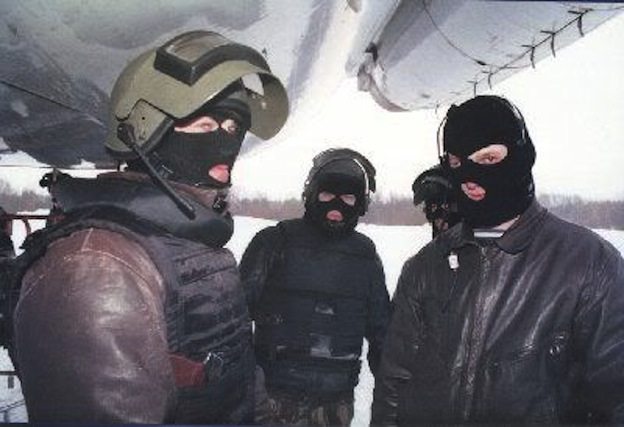
    But Russia has another and far more shadowy insurance policy in Syria. To enact that policy, Russia can call on agents with Zaslon, or “Screen,” an ultra-secret group of special operatives long rumored to operate in the country.

    WIB icon

    Like their American counterparts, the public glamorizes Russia’s various “Spetsnaz” units, which are often willing to play along with the portrayals. But Zaslon doesn’t do that, as it doesn’t officially exist.

    But evidence for Zaslon’s presence in Syria grew stronger with the recent publication of a new (paywalled) article by authors Mark Galeotti and Jonathan Spyer in Jane’s Intelligence Review. Galoetti, a professor at New York University and an expert on Russian special operations forces, wrote the section on Zaslon and excerpted it on his blog.

    Zaslon, which operates under the Kremlin’s Foreign Intelligence Service, conduct its affairs in Syria separately from the Main Intelligence Directorate, or GRU. While GRU agents work in the Syrian defense ministry in Damascus, Zaslon is a “small special forces team … reporting neither to the GRU or to regular military cells, but instead to the Russian embassy on Omar Ben Al Khattab Street,” Galeotti wrote.

    What does Zaslon do? It could be serving in an advisory role to Syrian military and government officials, in addition to feeding intelligence back to Moscow. But another job could be — in the event of a regime breakdown — to protect, rescue or seize Russian nationals, assets and intelligence documents in the country.

    Or whatever else needs doing.

    Galeotti added:

    The last time I heard with any confidence of Zaslon being deployed (other than a few individuals in extreme diplomatic protection missions) was to Baghdad in the final days of Saddam Hussein’s dictatorship. Then, their role was to secure (retrieve or destroy) particular documents, military tech and whatever else Moscow wanted to ensure did not end up in American hands. It could be that, as higher tech Russian kit begins to bolster the regime’s capabilities, Zaslon is being deployed again as a precautionary measure.

    War is Boring

    Share. Facebook Twitter LinkedIn Email WhatsApp Copy Link
    Previous ArticleSyria’s Kurds Are Contemplating an Aleppo Alliance with Assad and Russia
    Next Article Excerpt: The inside story of Obama’s Iran strategy
    Subscribe
    Notify of
    guest
    guest
    0 Comments
    Newest
    Oldest Most Voted
    Inline Feedbacks
    View all comments
    RSS Recent post in french
    • La liberté comme dette — et comme devoir trahi par les gouvernants 2 January 2026 Walid Sinno
    • La « Gap Law »: pourquoi la précipitation, et pourquoi les Français ? 30 December 2025 Pierre-Étienne Renaudin
    • Au Liban, une réforme cruciale pour sortir enfin de la crise 23 December 2025 Sibylle Rizk
    • Le Grand Hôtel Abysse sert toujours des repas en 2025 16 December 2025 Walid Sinno
    • Au cœur de Paris, l’opaque machine à cash de l’élite libanaise 5 December 2025 Clément Fayol
    RSS Recent post in arabic
    • ردّاً على فاخر السلطان: إما قانون دولي يُحترم، أو فوضى يدفع ثمَنَها الجميع 5 January 2026 د. فيصل الصابغ
    • بيان جمعية المصارف حول “مشروع قانون الانتظام المالي واسترداد الودائع” 5 January 2026 الشفّاف
    • فنزويلا الملاذُ الآمن لقيادات حزب الله والعلماء النوويين الإيرانيين! 4 January 2026 خاص بالشفاف
    • دونالد ترامب ممزّق بين الإمارات العربية المتحدة والمملكة العربية السعودية 4 January 2026 خاص بالشفاف
    • هَلَّلتُم لاعتقال “صدام”.. فلماذا اعتقالُ مادورو “بلطجة”! 3 January 2026 فاخر السلطان
    26 February 2011

    Metransparent Preliminary Black List of Qaddafi’s Financial Aides Outside Libya

    6 December 2008

    Interview with Prof Hafiz Mohammad Saeed

    7 July 2009

    The messy state of the Hindu temples in Pakistan

    27 July 2009

    Sayed Mahmoud El Qemany Apeal to the World Conscience

    8 March 2022

    Russian Orthodox priests call for immediate end to war in Ukraine

    Recent Comments
    • P. Akel on The Grand Hôtel Abysse Is Serving Meals in 2025
    • Rev Aso Patrick Vakporaye on Sex Talk for Muslim Women
    • Sarah Akel on The KGB’s Middle East Files: Palestinians in the service of Mother Russia
    • Andrew Campbell on The KGB’s Middle East Files: Palestinians in the service of Mother Russia
    • farouk itani on A Year Later, Lebanon Still Won’t Stand Up to Hezbollah
    Donate
    © 2026 Middle East Transparent

    Type above and press Enter to search. Press Esc to cancel.

    wpDiscuz