



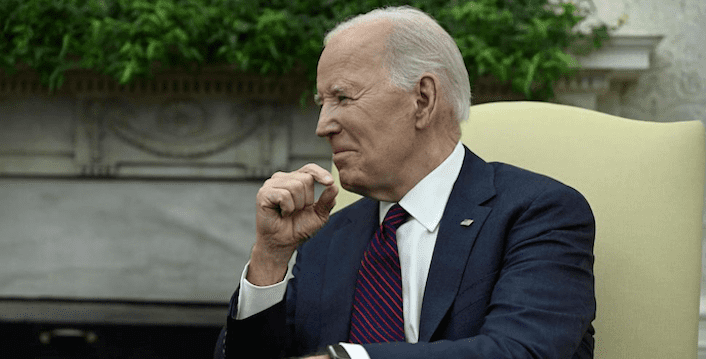
If Joe Biden is reelected as US President in November, there is a “heightened possibility of considerable military pressure on Iran,” warned Washington Institute executive director Robert Satloff.
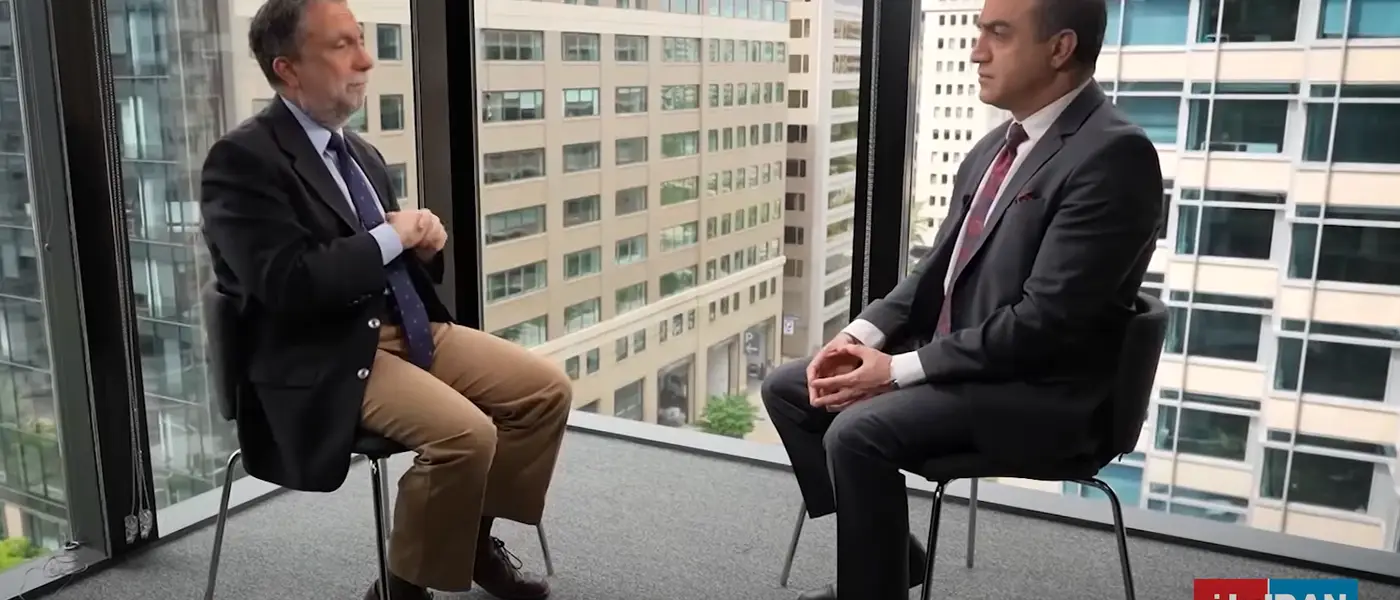
Speaking to Iran International, Satloff speculated on the potential directions a second term for President Joe Biden could take.
He suggested that the administration could either revisit the spirit of the JCPOA, as seen in the second Obama administration or adopt a different, more assertive approach towards Iran.
“I don’t think the government will say, let’s try JCPOA again and get around to the bargaining table. You will hear a debate about military pressure producing diplomatic options. There’s a heightened possibility in a second Biden administration that there will be more considerable military pressure on Iran,” Satloff stated.
In 2015, Iran and major world powers, including the five permanent members of the UN Security Council, signed the JCPOA in Vienna. Under the agreement, Iran pledged to reduce its nuclear capability in exchange for relief from economic sanctions. In 2018, President Donald Trump withdrew from the Iran deal and imposed sanctions that crippled the Iranian economy.
In spite of sanctions, Iran has continued to enrich uranium far beyond JCPOA boundaries with the UN warning that Iran is weeks not months from a nuclear weapon, a major threat to global peace.
Asked about Biden’s Iran stance that critics from both sides of the political spectrum call soft, especially about Tehran’s role in Hamas’ October 7th attack on Israel, Satloff stated the administration wanted “to lower the potential for a truly regional conflagration.”
Not least, over 200 attacks took place against US positions in the Middle East after the outbreak of the Gaza war as punishment for the US supporting Israel’s right to defend itself.
Critics of Biden question the claim that Iran was unaware of the October 7 attack despite actively supporting militias in the region, primarily through its so-called “Axis of Resistance,” including Hamas in Palestine, Hezbollah in Lebanon, and other militant groups in Syria, Yemen, and Iraq.
In the course of last year Iran’s leaders had held a series of meetings with Hamas’s political leaders in the build-up to the attack. Within hours of the attack state-sponsored celebrations took place in Iran.
The Hamas invasion saw at least 1,200 killed, including at least 30 US citizens, and 252 more taken hostage. In its subsequent military operation in Gaza, Israel has killed over 35,000 people, according to the Hamas-run health ministry.
If the US wants to “adequately deal with what is going on in Syria, Iraq, Yemen and in Lebanon, they need to deal directly with what is going on in Tehran as it is the capital of this alliance of terror,” Satloff said. Last year the US named Iran as the world’s number one state sponsor of terror.In spite of the US revealing Tehran’s funding of Hamas to the tune of at least €100m a year, plus arming and training the terror group, the Biden administration has largely held that Tehran was not responsible for October 7, the trigger for the longest and bloodiest Gaza war since Hamas took control of the Strip in 2007 in a bloody coup.
Iran and Israel’s shadow war has escalated since the start of last month, forcing Biden to confront an ever-more bold and aggressive Tehran. Iran attacked Israel last month in retaliation for an apparent Israeli strike on its consulate in Damascus that killed 7 Islamic Revolutionary Guard Corps (IRGC) members.
Satloff said Tehran’s retaliatory attack showed how vulnerable Iran is and not as militarily capable as it portrays. “As we say in America, they couldn’t hit the broad side of a barn as many missed not their targets, but the country they were even attacking, landing in Jordan, Lebanon, or elsewhere.”
While over 300 drones and missiles were used in the attack, almost all were intercepted by Israel’s defense system and a US-led coalition.
Six days after the operation, an Israeli strike targeted a vital component of the S-300 air defense system at Iran’s central city of Isfahan.
“Israelis opted for retaliation with a powerful message which showed the Iranians we can go anywhere, do anything, hit any target, and you can not stop us,” Satloff said.
The US has also been dragged into Iran’s proxy war most recently against Yemen’s Houthi militia. The Iran-backed terror group’s Red Sea blockade targeting global shipping has seen the US and UK engage in strikes on Houthi infrastructure in Yemen as well as defensive actions against drone and missile strikes in the vital trade route.
Talking about the future of tensions in the region, Satloff said hopes for de-escalation look unlikely, “I’m not sure it’s in Iran’s interest for there to be quiet, and so I think we’re already seeing some Iranian militias also have an uptick and activity in the last couple of weeks coming out of Syria and Iraq, so I fear that we will have a higher level of tension as we move toward our November election.”