
Close Menu
    Facebook Instagram LinkedIn
    • العربية (Arabic)
    • English
    • Français (French)
    Facebook Instagram LinkedIn
    Middle East Transparent
    • Home
    • Categories
      1. Headlines
      2. Features
      3. Commentary
      4. Magazine
      5. Cash economy
      Featured
      Headlines Yusuf Kanli

      Why Ankara Sees Israels’s Latest Moves As A Strategic Challenge

      Recent
      1 January 2026

      Why Ankara Sees Israels’s Latest Moves As A Strategic Challenge

      28 December 2025

      Writing Off the State’s Debt to BDL Is Not Reform — It Is Amnesty by Another Name

      27 December 2025

      Draining the Swamp, Not Chasing the Mosquitoes

    • Contact us
    • Archives
    • Subscribe
    • العربية (Arabic)
    • English
    • Français (French)
    Middle East Transparent
    You are at:Home»Categories»Features»Philosopher Sandel says Saudi reforms need critical thinking to succeed

    Philosopher Sandel says Saudi reforms need critical thinking to succeed

    0
    By Reuters on 11 December 2021 Features, Headlines

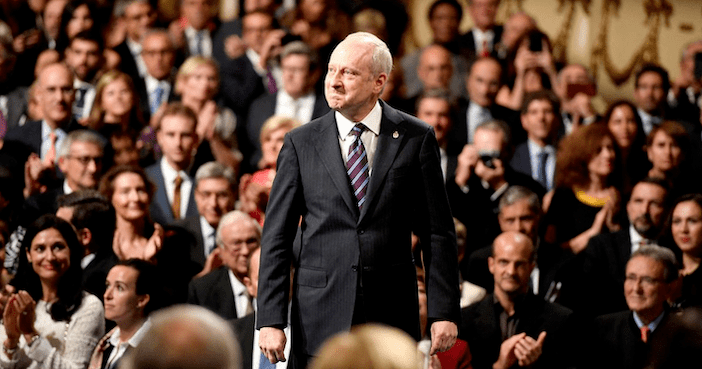
    DUBAI, Dec 11 (Reuters) – Saudi authorities’ willingness to promote critical thinking will determine if a reform drive launched there succeeds, American political philosopher Michael Sandel said after participating in the ultra-conservative kingdom’s first-ever philosophy conference.


    Sandel, a Harvard University professor described by the Times Literary Supplement as the “most important and influential living philosopher”, spoke to Reuters after discussing notions of morality, justice and universal duty with Saudi students.

    Philosophy is not taught in Saudi universities and had been considered heretical thinking there for decades.

    “Engaging in philosophical discussions, especially in circumstances such as these, is a challenging, even a risky undertaking. I felt it was a risk worth taking,” Sandel said on Friday in an online interview.

    The conference was part of a charm offensive by Saudi Crown Prince Mohammed bin Salman, who is seeking to revive a reputation damaged by a poor human rights record, the war in Yemen and the killing of dissident Saudi journalist Jamal Khashoggi in the kingdom’s Istanbul consulate in 2018.

    Sandel said it was hard to predict what the ultimate course of the prince’s “experiment” would be.

    “But promoting critical thinking, I think, is at least worth trying,” he said, adding that Saudi Arabia’s younger generation seemed hungry to engage in philosophical discussions.

    “I want to encourage it, even while recognising that there is a certain risk and unpredictability to the course it may eventually take.”

    Prince Mohammed, known as MbS, is de facto ruler of the kingdom, the world’s top oil exporter and a key U.S. ally. He has moved over the past five years to consolidate power and sidelined rivals and detained hundreds of clerics, journalists, royals and activists.

    While many significant controls remain, authorities have eased the guardianship system, which gives men significant control over the lives of their female relatives, and lifted a ban on women driving.

    The kingdom also opened up for cinemas, concerts and tourism in a bid to diversify the economy away from oil.

    Sandel said it was too early to draw conclusions about the motivation behind the reform drive.

    “Is this a genuine opening for philosophy and critical thinking? Or is it simply for… PR? I’m not sure. Only time will tell,” he said.

    “All I can say is I think that if there is a possibility of encouraging philosophy and critical thinking in Saudi Arabia, that’s a possibility worth exploring.”

    Share. Facebook Twitter LinkedIn Email WhatsApp Copy Link
    Previous Articleتحركات مثيرة للقلق في شمال شرق آسيا
    Next Article د. فارس سعيد: أنا ذاهبٌ غداً للمثولِ أمامَ القضاء.. ولن نركع يوماً لحزب الله!
    Subscribe
    Notify of
    guest
    guest
    0 Comments
    Newest
    Oldest Most Voted
    Inline Feedbacks
    View all comments
    RSS Recent post in french
    • La liberté comme dette — et comme devoir trahi par les gouvernants 2 January 2026 Walid Sinno
    • La « Gap Law »: pourquoi la précipitation, et pourquoi les Français ? 30 December 2025 Pierre-Étienne Renaudin
    • Au Liban, une réforme cruciale pour sortir enfin de la crise 23 December 2025 Sibylle Rizk
    • Le Grand Hôtel Abysse sert toujours des repas en 2025 16 December 2025 Walid Sinno
    • Au cœur de Paris, l’opaque machine à cash de l’élite libanaise 5 December 2025 Clément Fayol
    RSS Recent post in arabic
    • هَلَّلتُم لاعتقال “صدام”.. فلماذا اعتقالُ مادورو “بلطجة”! 3 January 2026 فاخر السلطان
    • شخصيات إيرانية بارزة تدعو لـ”انتقال سلمي للسلطة” 3 January 2026 خاص بالشفاف
    • هل نحن في “دولة” أم في دويلات؟ 2 January 2026 وفيق هواري
    • ليبيا: انتهاك الحقوق والتمييز وجريمة اغتيال روح البحث العلمي 2 January 2026 أبو القاسم المشاي
    • انتفاضة إيران “اليوم الخامس”: تظاهرات في المدن الصغيرة و6 قتلى 1 January 2026 الشفّاف
    26 February 2011

    Metransparent Preliminary Black List of Qaddafi’s Financial Aides Outside Libya

    6 December 2008

    Interview with Prof Hafiz Mohammad Saeed

    7 July 2009

    The messy state of the Hindu temples in Pakistan

    27 July 2009

    Sayed Mahmoud El Qemany Apeal to the World Conscience

    8 March 2022

    Russian Orthodox priests call for immediate end to war in Ukraine

    Recent Comments
    • P. Akel on The Grand Hôtel Abysse Is Serving Meals in 2025
    • Rev Aso Patrick Vakporaye on Sex Talk for Muslim Women
    • Sarah Akel on The KGB’s Middle East Files: Palestinians in the service of Mother Russia
    • Andrew Campbell on The KGB’s Middle East Files: Palestinians in the service of Mother Russia
    • farouk itani on A Year Later, Lebanon Still Won’t Stand Up to Hezbollah
    Donate
    © 2026 Middle East Transparent

    Type above and press Enter to search. Press Esc to cancel.

    wpDiscuz