



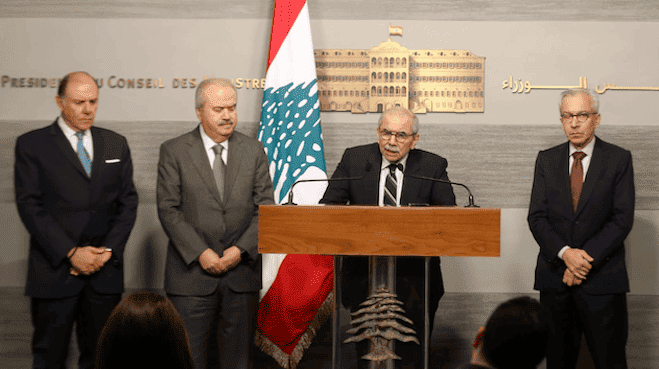
Prime Minister Nawaf Salam’s December 19 address unveiling the Gap Law marks a pivotal moral and political reckoning in Lebanon’s financial collapse. Confronting years of elite privilege, insider gain, and structural impunity, Salam directly challenged the “abuse by a few of the interests of the many,” calling for the clawback of illicit profits accumulated after 2019 by those shielded by proximity to power—most notably allies of the former Banque du Liban governor and their banking partners.
Here, policy becomes ethical duty. Salam situates restitution in the terrain of justice, echoing Kant’s imperative:
“Act only according to that maxim whereby you can at the same time will that it should become a universal law.”
For the first time since the collapse, Lebanon is being asked to move from clientelist privilege to principled equity. The proposed framework spreads responsibility across the state, banks, and beneficiaries of abuse, while prioritizing protection for the vast majority of depositors—nearly 85%—holding less than $100,000. This realignment of burden signals not technocratic repair, but a moral resetting of the social contract.
Yet Salam’s courage now demands execution. Without enforcement, Lebanon risks what Hannah Arendt warned as the banality of complicity—crime normalized through inaction. With it, Lebanon might reclaim the Rawlsian promise of fairness under a veil of ignorance: a system that would be just even if none of us knew in advance where we stood within it.
Parliament now holds responsibility. Their duty is not merely legislative, but historical: to vindicate the many against the predation of the few, and to restore the possibility of trust in a sovereign state. The Gap Law is no panacea, but it is a necessary line in the sand—a philosophical bulwark against moral decay in a nation exhausted by elite corruption.
If enacted with integrity, Salam’s stand could mark not simply financial restructuring, but the re-opening of Lebanon’s ethical horizon.