



Turkey is largely bereft of Christianity, while Lebanon still has a vibrant Christian presence.
Pope Leo XIV’s first overseas trip will take him to two ancient, historic lands, both lands of the Bible and of the early Church. But Turkey and Lebanon are connected to each other by a difficult, shared past and present sharp contrasts today.
Ottoman Turkey ruled what is now Lebanon for more than 400 years, and Ottoman rule on Mount Lebanon ended in 1918, amid a wartime famine that killed hundreds of thousands of people, most of them Maronite
Turkey today is a dynamic, growing “middle power” aggressively projecting its influence, including in Africa and Central Asia. It is a key NATO member and plays an important mediating role in various conflicts, while intervening in others. The country’s leader, President Recep Tayyip Erdoğan, is seen as both a capable visionary and power player and an intolerant authoritarian figure cracking down on internal political dissent.
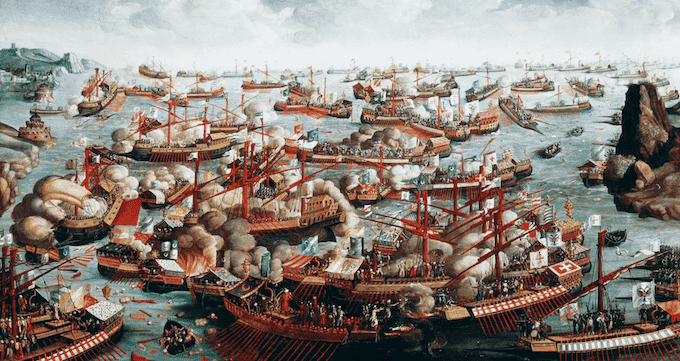
When Pope Paul VI became the first pope to visit Turkey in 1967, he brought with him some of the Ottoman battle flags captured at the great Christian victory at Lepanto, returning them to the Turks as a gesture of reconciliation. But Turkey under Erdoğan is an Islamist revisionist power, not only glorying in its imperial past but aggressively seeking to spread Islam worldwide.
While restricting Christian missionary activity and turning not one but several historic Byzantine churches back into mosques, Turkey’s official religious affairs office Diyanet takes advantage of Western freedoms, funding and controlling hundreds of mosques in Western countries, including a massive Ottoman-style structure in suburban Maryland just outside Washington, D.C. And while there is little doubt that the Turkish government will be gracious hosts to the Holy Father, anti-Christian (and antisemitic and anti-Western) sentiment is common in Erdoğan’s Turkey and often abetted by those in power.
Turkey’s Christian population is tiny, a few hundred thousand people, less than 0.5% of the country’s 87 million people. Anatolia, the Asian mainland of modern Turkey, had a Christian population of perhaps 20% in 1915, but that is all gone.
Hundreds of thousands of Christians were massacred by the Ottomans in Anatolia during the First World War — what the world condemns, and the Turkish government still denies, as the Armenian, Syriac and Pontic (Greek) genocides. The Pope will meet with leaders of the tiny Greek, Armenian and Syriac Christian communities in Istanbul, including visiting the Syrian Orthodox Church of Mor Efrem (St. Ephrem the Syrian), the only new church (opened in 2023) built in Turkey in more than 100 years.
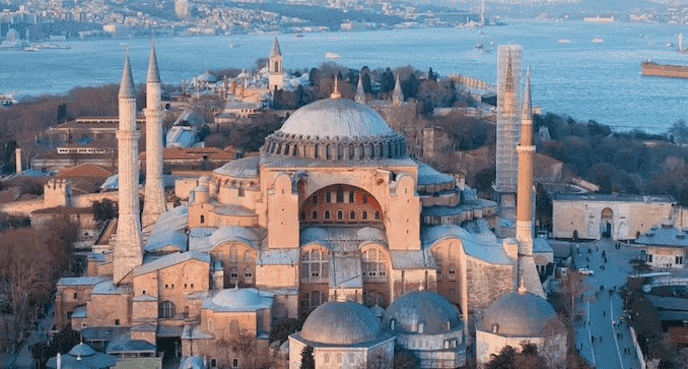
When Pope Leo visits the famed Blue Mosque in Istanbul’s Sultanahmet neighborhood, he will see looming almost next door the Ayasofya Mosque — for centuries the largest church in Christendom as Hagia Sophia — which was once a museum but was turned into a mosque again in 2020 in an act of blatant populist Islamist chauvinism.
Ayasofya was once, in a way, a “Catholic” basilica, in that the Patriarchate of Constantinople was at the time of the city’s taking in 1453 in full communion with Rome (as a result of the Council of Florence), as were the last two emperors of Byzantium. One of the first acts of the victorious Mehmet the Conqueror was to appoint a new Greek Orthodox patriarch hostile to union with Rome.
Pope Leo will not visit Ayasofya, in likely deference to the Orthodox. In 1967, Pope Paul VI was said to have committed a diplomatic faux pas when he prayed while visiting the then church-turned-mosque-turned-museum. It was the first open Catholic prayer in that sacred space for more than 500 years.
When Pope Leo visits the town of Iznik (ancient Nicaea) to commemorate the 1,700th anniversary of the ecumenical council held there, he won’t be holding a meeting at the place where the council was actually held. He can’t. That would be the Ayasofya basilica of Iznik, which was also turned into a mosque in 2011. There is no real Christian community remaining in the city.
If Turkey is dynamic, growing and mostly bereft of Christianity, Lebanon is the opposite. The country is, and has been for years, in deep economic and social crisis. Much of the country’s youth is fleeing, including its Christian youth.
The country is dying from political neglect, withering from inflation, unemployment, crime and war. Informally (there is no official census), Christians are still about a third of Lebanon’s population of about 6 million people.
While Turkey’s Christian footprint is all too often in the past, archaeological or ancient, in Lebanon there are still all the elements that make up a vibrant, living Christian — especially Maronite Catholic — presence. Christians still have half the Parliament seats and hold key government positions, including president of the republic and commander of the Lebanese Armed Forces. The Christian influence on Lebanese society is still palpable.
While Turkey houses a miniscule Christian remnant, Lebanon’s Christian community is still substantial, still viable, if deeply threatened by circumstances. There are still many towns and villages that are almost entirely Christian, as is a good portion of the Mount Lebanon region stretching from East Beirut to the mountains near the Muslim town of Tripoli to the north. This is the last remaining Christian heartland in West Asia.
Lebanon is in a way what Turkey used to be before 1915, a country with a significant Christian population at great risk of further decline and disappearance. While no one is expecting Christian massacres in Lebanon, the danger is that economic crisis, inflation and insecurity will bring about the disappearance of an ancient Christian community just the same.
Pope Leo will encounter Islam and engage in interfaith outreach in both countries. His engagement with Christians will be slightly different. In Turkey, Pope Leo seeks to fan the embers of a dying flame, while in Lebanon he aims to secure the survival of a deeply rooted, living tree, now buffeted by gathering storms.
Alberto M. Fernandez Alberto M. Fernandez is a former U.S. diplomat and a contributor at EWTN News.