



The war has jolted global energy markets, pushing Brent crude above $118 per barrel and sending European natural gas prices up by nearly 30% in a single day. For Türkiye, heavily dependent on imported energy, the shock is feeding directly into inflation expectations, widening the current account deficit and forcing a recalibration of economic policy.
The timing of the shock is critical. Türkiye had been moving, albeit cautiously, toward disinflation. Annual inflation, which had peaked above 60% in 2024, had eased to around 32% by February 2026. That trend is now under renewed pressure.
Energy imports, which totalled approximately $65 billion in 2025, remain the main channel through which global price increases feed into the domestic economy. Treasury and Finance Ministry officials estimate that every $10 increase in oil prices adds between $4.5 billion and $5 billion to the current account deficit.
The Turkish Central Bank responded on March 13 by holding its policy rate steady, effectively suspending earlier expectations of a gradual easing cycle in the second quarter. Officials signalled that the external shock, combined with persistent services inflation, leaves little room for policy relaxation without risking a reversal of recent gains.
Higher energy costs are already feeding into transportation and industrial input prices. Market participants report upward revisions in fuel-linked sectors, raising concerns that inflation could stabilize above 35% in the coming months if price pressures persist.
Supply concerns deepen after Gulf disruptions
Beyond price effects, supply risks have intensified. Iran, which provided roughly 14% of Türkiye’s natural gas imports in 2025, has not yet halted deliveries. However, the broader regional infrastructure picture has deteriorated significantly.
Reports emerged on March 9 that of a severe damage to facilities linked to Qatar’s Ras Laffan LNG complex following strikes in the Gulf. While Qatar has not officially declared force majeure, traders indicate that cargo availability has tightened, pushing Asian and European buyers into more aggressive competition for spot LNG shipments.
For Türkiye, which relies on both long-term contracts and spot purchases, this shift translates into higher procurement costs and increased exposure to market volatility. Energy officials in Ankara have confirmed that additional spot cargoes were secured on March 14 at prices significantly above January averages.
Markets hold, but fragility remains
Despite these pressures, Turkish financial markets have shown relative resilience. Between March 10 and March 14, Borsa Istanbul declined by approximately 5.5%, a more limited correction compared to double-digit losses recorded in several emerging Asian markets over the same period.
Finance Minister Mehmet Şimşek stated on March 15 that Türkiye remains “an island of relative stability,” pointing to diversified supply channels and strengthened policy coordination. Türkiye currently sources LNG from 12 different suppliers and receives pipeline gas from four main routes, including Russia, Azerbaijan and Iran.
In addition, expanded underground storage capacity, which exceeded 6 billion cubic meters at the start of March, has allowed authorities to smooth short-term supply fluctuations. Energy officials note that storage withdrawals increased during the week of March 11 as a precautionary measure.
Still, analysts caution that this resilience reflects active management rather than structural insulation. The underlying exposure to global energy prices remains unchanged.
Ceyhan emerges as alternative route
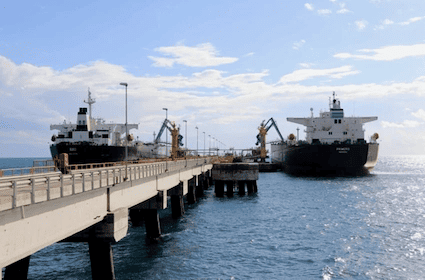
The most significant development for Türkiye’s strategic position came on March 16, when Iraqi authorities and the Kurdistan Regional Government confirmed the resumption of oil exports through the Iraq-Türkiye pipeline to the Ceyhan terminal. Flows are expected to gradually reach 400,000 barrels per day in the coming weeks.
This decision comes at a time when the Strait of Hormuz, through which nearly 20% of global oil supply normally passes, has been effectively constrained by ongoing military activity. As a result, overland and northern export routes have gained renewed importance.
For global markets, the Ceyhan route offers a partial mitigation of supply disruptions. For European buyers, it provides an additional source of crude that bypasses the most volatile maritime corridor. For Türkiye, it reinforces its role as a transit hub and strengthens its geopolitical leverage at a moment of heightened uncertainty.
Energy analysts note that if flows stabilize at projected levels, Türkiye could handle a significantly larger share of regional export volumes, particularly if further disruptions occur in the Gulf.
A narrow path forward
The coming weeks will be decisive. If the conflict remains contained, Türkiye may be able to manage the shock through a combination of policy discipline, diversified supply and strategic positioning.
However, a prolonged escalation, particularly one targeting Iranian production or additional LNG infrastructure, could push oil prices toward $140–$150 per barrel. Under such a scenario, the risk of renewed inflationary acceleration and a widening current account deficit would increase sharply.
For Ankara, the immediate priority is to prevent an energy-driven setback to its stabilization program while leveraging its geographic position to secure longer-term strategic gains. The events of March 2026 have once again demonstrated that Türkiye’s economic trajectory remains closely tied to developments far beyond its borders, even as its role within those dynamics continues to grow.