



Erhürman’s structured settlement methodology and renewed high-level diplomacy open space for cautious optimism, yet meaningful progress depends on a substantive shift in Greek Cypriot political approach.
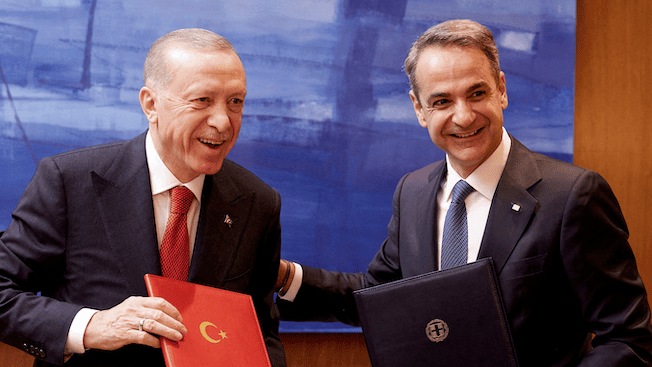
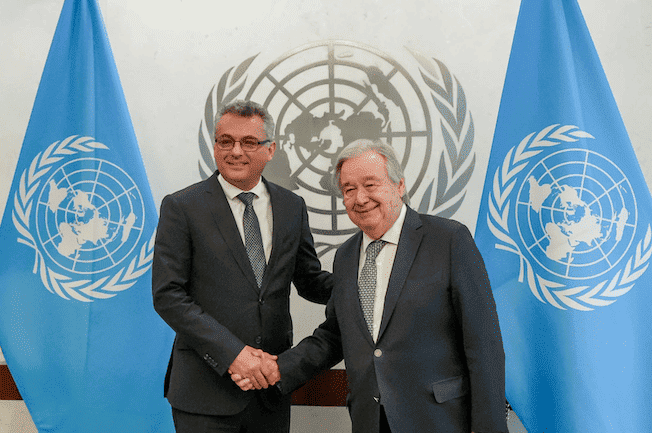
This week’s synchronized diplomatic activity surrounding Cyprus unfolded with a tone that was measured yet unmistakably more substantive than routine. In New York, United Nations Secretary-General Antonio Guterres held an extended meeting with Turkish Cypriot leader Tufan Erhürman. In Ankara, President Recep Tayyip Erdoğan and Greek Prime Minister Kyriakos Mitsotakis reaffirmed their commitment to calm bilateral relations and structured engagement.
Individually, these meetings do not amount to a breakthrough. Collectively, however, they hint at something Cyprus has lacked for years: The possibility of a recalibrated diplomatic phase grounded less in declaratory optimism and more in structural realism.
Yet optimism, to remain credible, must be disciplined. Unless there is a substantive shift on the Greek Cypriot side regarding political equality, security architecture and the costs of continued stalemate, expectations of rapid progress would remain misplaced.
A meeting that went beyond the clock
In remarks to newspeople after his meeting in New York, Tufan Erhürman described his conversation with Antonio Guterres as both “useful and productive.” Originally scheduled for 30 minutes, the session extended to approximately one hour and ten minutes.
Upon his return to Northern Cyprus, Erhürman reiterated that the extended duration was not merely procedural. “The UN is closely following the Cyprus issue at the Secretary-General level,” he said, emphasizing that Guterres had not lost interest or momentum despite global crises competing for attention.
In high-level diplomacy, duration is rarely incidental. At a time when the Secretary-General’s agenda is crowded with wars, regional instability and rapidly evolving security crises, devoting more than double the planned time to Cyprus carries weight. It signals that the United Nations does not consider the file exhausted, nor relegated to symbolic management.
Erhürman stressed that he formally presented his four-point methodology proposal in detail. He noted that this proposal had been publicly discussed during his campaign and had generated various interpretations. The New York meeting, he said, provided an opportunity to clarify directly to the Secretary-General what each pillar entails. According to Erhürman, Guterres “understood these points clearly.”
The four pillars are structured to prevent the repetition of negotiation cycles that generate diplomatic motion without structural movement:
• Formal acceptance of political equality, including rotation of the presidency and effective participation in governance with at least one positive vote.
• Establishment of a defined timetable to prevent open-ended procedural drift.
• Confirmation that previously achieved convergences will not be reopened for renegotiation.
• A prior guarantee that, should the Greek Cypriot side once again leave the table, the Turkish Cypriot people will not automatically be returned to today’s status quo of isolation.
Erhürman also made clear that the Turkish Cypriot side is not prepared for “talks for the sake of talks.” What it is prepared for, he said, is a result-oriented process conducted under the correct modality. Past disappointments must not be repeated.
He underscored that one of the key lessons from previous rounds, particularly post-Crans Montana, is that restarting from zero has proven ineffective. The second pillar of his proposal, he noted, foresees resuming negotiations from where they left off before Crans Montana rather than reopening settled chapters. “Starting from scratch,” he argued, risks regressing to earlier frameworks such as the Annan Plan stage without building on accumulated convergences.
Significantly, Erhürman publicly rejected any narrative suggesting that Türkiye has obstructed the process. “There is no such thing as Türkiye blocking this. If anyone is blocking, it is me,” he stated, emphasizing that he had personally insisted on certain procedural safeguards before advancing further. This clarification was also conveyed to Guterres, he said.
Confidence-building measures and local ownership
Beyond methodology, Erhürman detailed discussions on confidence-building measures. He reiterated his position that such measures should be resolved primarily in Nicosia rather than in expanded 5+1 formats abroad. He referenced the importance of new crossing points and noted that, despite prior commitments, measures expected to be completed by Jan. 31 had not materialized.
He also briefed the Secretary-General on multi-phased proposals for opening new crossings and on symbolic initiatives such as organizing an under-14 football event in the buffer zone. These initiatives, he clarified, are not national competitions but community-level activities aimed at fostering contact.
The underlying argument was consistent: incremental but tangible steps on the ground can rebuild credibility. Without such steps, broader political frameworks remain abstract.
No fatigue at the UN
Addressing speculation that global crises might have diminished UN attention on Cyprus, Erhürman dismissed the notion. He said he observed neither fatigue nor disengagement from Guterres. On the contrary, the Secretary-General demonstrated attentiveness, asked detailed questions and concluded the meeting by expressing a desire to remain in closer contact.
The phrase “this time must be different,” frequently associated with Guterres’ previous remarks on Cyprus, reportedly resurfaced in their discussion. Erhürman indicated that both sides acknowledged the necessity of avoiding a repetition of past disappointments.
The meeting, therefore, went beyond the clock not only in duration but in conceptual engagement. It was less about relaunching talks and more about redesigning their architecture.
Feb. 24: The next test in Nicosia
The next critical moment will arrive on Feb. 24, when Erhürman is scheduled to meet Greek Cypriot leader Nikos Christodoulides at the UN representative’s residence in the Nicosia buffer zone.
That meeting, agreed at the previous trilateral contact, will test whether the conceptual alignment reached in New York can translate into practical movement on the island.
The venue itself is symbolically loaded. The buffer zone has long served as both separator and mediator. Convening there places responsibility squarely on the two leaders, under UN facilitation but not external orchestration.
If progress is to materialize, it must emerge in Nicosia. The Feb. 24 encounter will therefore serve as an early indicator of whether renewed seriousness can generate structural adjustment.
A glimpse, not a guarantee
The extended UN engagement, reaffirmed bilateral calm between Ankara and Athens, the emphasis on tangible confidence-building measures and the articulation of a structured methodology together suggest seriousness.
Yet history counsels caution. Cyprus has witnessed atmospheres of promise before.
The difference now lies in the explicit recognition that procedural optimism is insufficient. Political equality must be internalized. Security must be reciprocal. Asymmetry must be addressed.
If the Feb. 24 meeting demonstrates genuine willingness to move beyond ritual exchanges, this phase may represent the beginning of a recalibrated trajectory.
If not, Cyprus risks returning to the familiar cycle of extended conversations without structural transformation.
Diplomacy rarely advances in leaps. It progresses in recalibrations. Last week did not mark a breakthrough. But it represented a serious and deliberate adjustment toward a framework in which a breakthrough, eventually, becomes conceivable.