
Close Menu
    Facebook Instagram LinkedIn
    • العربية (Arabic)
    • English
    • Français (French)
    Facebook Instagram LinkedIn
    Middle East Transparent
    • Home
    • Categories
      1. Headlines
      2. Features
      3. Commentary
      4. Magazine
      Featured
      Headlines Walid Sinno

      The Grand Hôtel Abysse Is Serving Meals in 2025

      Recent
      15 December 2025

      The Grand Hôtel Abysse Is Serving Meals in 2025

      14 December 2025

      Banking Without Bankers: Why Lebanon Must End the Sub-Agent Experiment

      12 December 2025

      Local Spies with Lethal Gear: How Israel and Ukraine Reinvented Covert Action

    • Contact us
    • Archives
    • Subscribe
    • العربية (Arabic)
    • English
    • Français (French)
    Middle East Transparent
    You are at:Home»Categories»Features»Russia Stumbles in Syrian Air War

    Russia Stumbles in Syrian Air War

    0
    By War is Boring on 29 October 2015 Features

    It’s all because of logistics … or lack of it

     Dave Majumdar
    The National Interest8

    Russia’s pace of air operations in Syria appears to have dropped off slightly from their peak in recent days. While the Russians had flown as many as 88 sorties per day about two weeks ago, more recently that number has dropped off as many U.S. defense officials had predicted.

    “In the course of the last 24 hours, the Russian air group carried out 59 sorties engaging 94 terrorist objects in the Hama, Idlib, Lattakia, Damascus, Aleppo, Deir ez-Zor provinces,” reads an Oct. 26 release from the Russian Ministry of Defense. “In the course of the last three days, the aircraft of the Russian air group have performed 164 combat sorties engaging 285 terrorist objects.”

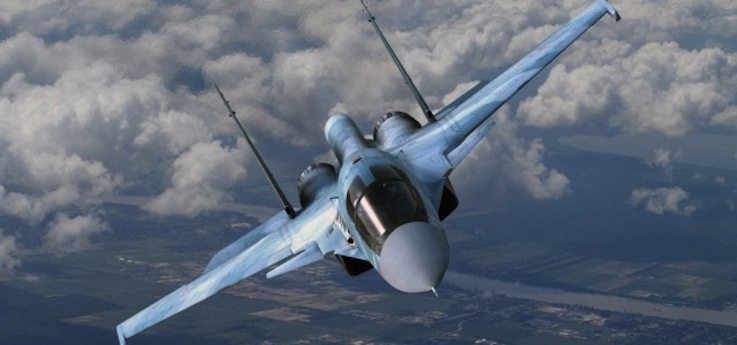
    That means that the Russians have been flying an average of 55 sorties per day with their mix of Sukhoi Su-24s, Su-25s, Su-30SM and Su-34s — which is a slower pace than before. But those figures are within the range Pentagon officials had predicted the Russians could fly with the number of jets they have deployed.

    The Russians are thought to have between 32 and 36 aircraft at their base in Latakia, which means they could generate with between 48 and 96 sorties per day with good logistics.

    WIB icon

    While the Russians initially surprised many with their ability to generate up to 88 sorties per day, most U.S. defense officials predicted those numbers could not be sustained for long. That’s because the Russians don’t have any recent experience deploying aircraft overseas, nor do they have a well-oiled logistical train that could sustain the pace for long.

    Indeed, most Pentagon officials I had talked to expected that logistics would prove to be the Russians’ Achilles’ Heel.

    Su-30s. Andrey Belenko/Flickr photo
    Indeed, USA Today reported Oct. 26 — citing an anonymous Pentagon official — that nearly one-third of Russia’s combat aircraft and 50 percent of its transports in Syria are grounded at any one time. The harsh conditions appear to be taking a toll on the Russian crews and their aircraft.

    My own sources said much the same. However, they said that logistics are probably the biggest factor in the drop-off, noting that Russian aircraft usually fare pretty well in harsh conditions because of their rugged construction. Regardless, the result is that the Russians are not quite matching the performance of U.S. Air Force, Navy or Marine Corps expeditionary forces.

    However, there is another factor that could be playing a role. The bulk of the Russian aircraft deployed to Syria are either upgraded but elderly airframes or brand new models that have not yet ironed out all of their various teething issues.

    Elderly aircraft — even refurbished ones — break down and require a lot of maintenance. That’s just a fact of life — and one of the reasons the U.S. Air Force is so eager to replace its oldest fighters (the U.S. Navy’s rebuilt F-14D jets are a good case study).

    But the same is true of brand-new aircraft. Until maintenance crews learn a jet’s quirks and which parts need replacing most often, new aircraft that have just entered service have horrible mission-capable rates. It happened with the F-22 when it was first introduced and it’s happening with the F-35 now. And Russia is not immune to the problem.

    Indeed, Russia’s most capable bomber in-theater, the Su-34 — which has been built in boutique quantities like most of the newest Russian jets — has had severe issues with maintenance in previous years due in part to its slow build rate.

    It remains to be seen if Russia will use this as an opportunity to revamp its logistical system. But if it does, it is possible that Russia might be able to ramp up its air operations once its crews learn to deal with the deployed environment and the correct spare parts start flowing in a timely manner.

    Only time will tell how the Russians will fare.

    This article originally appeared at The National Interest, where Dave Majumdar is defense editor.

    War is Boring

    Share. Facebook Twitter LinkedIn Email WhatsApp Copy Link
    Previous ArticleZealots Should Not Oversee Holy Sites
    Next Article Yemeni pilots carry out airstrikes with AT-802 turboprops
    Subscribe
    Notify of
    guest
    guest
    0 Comments
    Newest
    Oldest Most Voted
    Inline Feedbacks
    View all comments
    RSS Recent post in french
    • Au cœur de Paris, l’opaque machine à cash de l’élite libanaise 5 December 2025 Clément Fayol
    • En Turquie et au Liban, le pape Léon XIV inaugure son pontificat géopolitique 27 November 2025 Jean-Marie Guénois
    • «En Syrie, il y a des meurtres et des kidnappings d’Alaouites tous les jours», alerte Fabrice Balanche 6 November 2025 Celia Gruyere
    • Beyrouth, Bekaa, Sud-Liban : décapité par Israël il y a un an, le Hezbollah tente de se reconstituer dans une semi-clandestinité 20 October 2025 Georges Malbrunot
    • L’écrasante responsabilité du Hamas dans la catastrophe palestinienne 18 October 2025 Jean-Pierre Filiu
    RSS Recent post in arabic
    • صديقي الراحل الدكتور غسان سكاف 13 December 2025 كمال ريشا
    • هدية مسمومة لسيمون كرم 13 December 2025 مايكل يونغ
    • كوريا الجنوبية تقترب من عرش الذكاء الاصطناعي 13 December 2025 د. عبدالله المدني
    • من أسقط حق “صيدا” بالمعالجة المجانية لنفاياتها؟ 13 December 2025 وفيق هواري
    • خاص-من منفاهما في روسيا: اللواء كمال حسن ورامي مخلوف يخططان لانتفاضتين 10 December 2025 رويترز
    26 February 2011

    Metransparent Preliminary Black List of Qaddafi’s Financial Aides Outside Libya

    6 December 2008

    Interview with Prof Hafiz Mohammad Saeed

    7 July 2009

    The messy state of the Hindu temples in Pakistan

    27 July 2009

    Sayed Mahmoud El Qemany Apeal to the World Conscience

    8 March 2022

    Russian Orthodox priests call for immediate end to war in Ukraine

    Recent Comments
    • P. Akel on The Grand Hôtel Abysse Is Serving Meals in 2025
    • Rev Aso Patrick Vakporaye on Sex Talk for Muslim Women
    • Sarah Akel on The KGB’s Middle East Files: Palestinians in the service of Mother Russia
    • Andrew Campbell on The KGB’s Middle East Files: Palestinians in the service of Mother Russia
    • Will Saudi Arabia fund Israel’s grip over Lebanon? – Truth Uncensored Afrika on Lebanon’s Sunnis 2.0
    Donate
    © 2025 Middle East Transparent

    Type above and press Enter to search. Press Esc to cancel.

    loader

    Inscrivez-vous à la newsletter

    En vous inscrivant, vous acceptez nos conditions et notre politique de confidentialité.

    loader

    Subscribe to updates

    By signing up, you agree to our terms privacy policy agreement.

    loader

    اشترك في التحديثات

    بالتسجيل، فإنك توافق على شروطنا واتفاقية سياسة الخصوصية الخاصة بنا.

    wpDiscuz