



Tony Barber in London
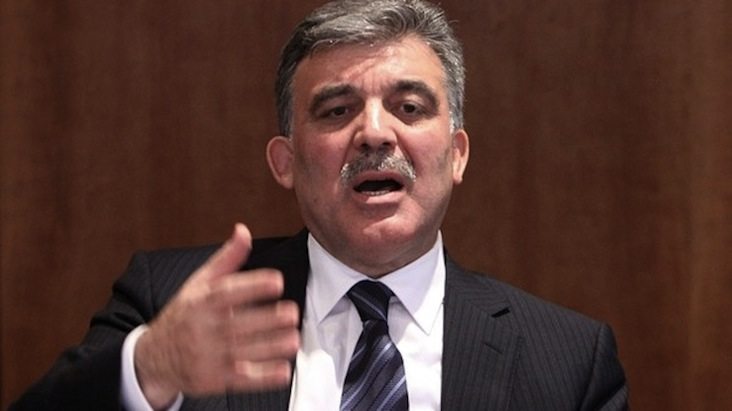
Having spent seven years as Turkey’s president, and five years before that as prime minister and foreign minister, Abdullah Gul portrays himself as an elder statesman content to dispense wisdom from the sidelines, not a politician thirsting for one last draught of power.
“In terms of political office, I don’t want to be seen as still ambitious,” Mr Gul told the Financial Times this week. “But I continue to express my opinions and provide advice in Turkey, through television appearances and at conferences. I can see that the general public receives this positively and gives it serious attention.”
Mr Gul, who turns 65 on Thursday, three days before Turkey holds a snap parliamentary election, withdrew from active politics after stepping down from the presidency in August 2014.
To a society aghast at the rising tide of war, terrorism and political polarisation inside and outside its borders, Mr Gul, who was modern Turkey’s first Islamist head of state, projects a reassuring figure of calm, experience and moderation.
But, choosing his words carefully, he alluded to concern that a greater concentration of power in the hands of Recep Tayyip Erdogan, his successor as president and his former political comrade-in-arms, risked damaging Turkish democracy.
“It’s a fact that the political struggle has always been quite acute in Turkey. But diversity and different voices are important. That’s how I’ve always seen it,” he said. “Turkey is a democracy. Turkey is a candidate for EU membership. On the other hand, I believe there is a lot of work that needs to be done, and we have to upgrade further what we have in Turkey.”
Mr Gul drew attention to the success in June’s election of the People’s Democratic party (HDP), a leftwing, pro-Kurdish movement which attracted 13 per cent of the vote and entered parliament for the first time, winning 80 seats. “I consider that to be positive for Turkey. It’s always been my approach, and my belief, that problems should be solved by engaging with parties, not excluding them,” he said.
Turkey is a democracy. Turkey is a candidate for EU membership. On the other hand, I believe there is a lot of work that needs to be done
He distinguished between the HDP and armed insurgents of the Kurdistan Workers’ party (PKK), with which Turkish security forces resumed hostilities in July after a two-year ceasefire.
“In our present situation,” he said, mentioning Syria’s civil war and Turkey’s struggle against Isis jihadis, “there can be no justification for Kurds in Turkey to take up arms. The PKK’s recent terrorist attacks are unacceptable.”
The HDP’s strong performance stripped Mr Erdogan’s ruling Justice and Development party (AKP) of its outright legislative majority for the first time since 2002. As a result, Mr Erdogan postponed plans to convert Turkey to a presidential system of government dominated by himself — plans that will have to remain on hold if Sunday’s election result delivers another hung parliament.
Mr Erdogan and Mr Gul co-founded the AKP in 2001 and shared a background in Turkish Islamist politics long before that, but they now hold rather different views about democracy and civil society.
Mr Erdogan has asserted control over the AKP machinery, making the party less in tune with Mr Gul’s notions of political pluralism. But Mr Gul spoke in April about the importance of checks and balances to protect democracy in a presidential system.
In the UK, Mr Gul observed in a speech last weekend at Oxford university that economic inequality, lack of transparency and the shortcomings of institutions were fuelling popular discontent across the Middle East — and in Turkey itself.
In a warning to Turkish politicians to keep abreast of the times, he said: “As a result of the strengthening of civil society in Turkey, our youth have reacted to the cutting down of trees for the sake of urban development, peasants have demonstrated against industrial activity polluting their land, and thousands have marched to protest against violence against women.”