
Close Menu
    Facebook Instagram LinkedIn
    • العربية (Arabic)
    • English
    • Français (French)
    Facebook Instagram LinkedIn
    Middle East Transparent
    • Home
    • Categories
      1. Headlines
      2. Features
      3. Commentary
      4. Magazine
      5. Cash economy
      Featured
      Headlines Yusuf Kanli

      Mojtaba Khamenei: From silent heir to Supreme Leader

      Recent
      13 March 2026

      Iran Alone

      13 March 2026

      A Farewell to a Mind That Spoke with History: In memory of Prof. Dr. İlber Ortaylı

      13 March 2026

      Lebanon’s failure to disarm Hezbollah keeps doing greater damage

    • Contact us
    • Archives
    • Subscribe
    • العربية (Arabic)
    • English
    • Français (French)
    Middle East Transparent
    You are at:Home»Categories»Headlines»Coronavirus spreads “exponentially” in Qatar’s labor camps

    Coronavirus spreads “exponentially” in Qatar’s labor camps

    0
    By CBS News on 17 May 2020 Headlines

    BY AMJAD TADROS

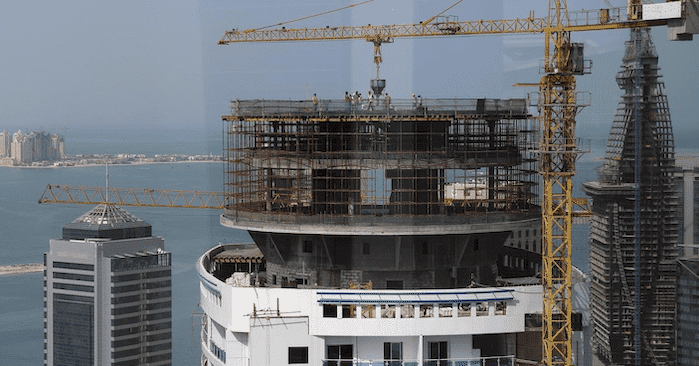
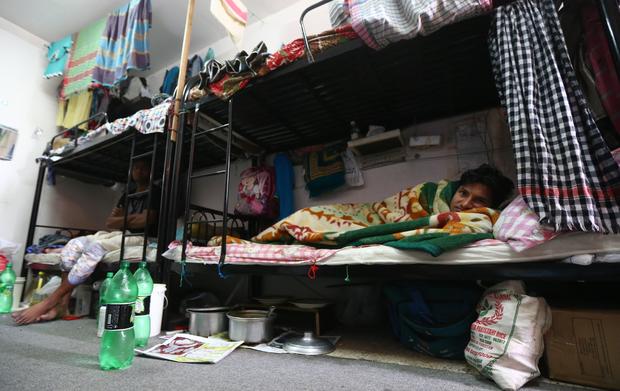
    Amman — On normal days, the tiny, gas-rich nation of Qatar looks like a giant construction site. Dozens of hotels and sports stadiums are being constructed, along with a world-class transportation infrastructure that includes a 47-mile metro system and miles of brand new roads. Most of these massive projects were scheduled to be finished in time for the 2022 Football World Cup, which Qatar was controversially awarded to host.Qatar sits on one of the world’s biggest natural gas reserves, so securing financing for the projects was never an issue. The biggest challenge was acquiring the manpower to build and oversee all the work. Like most of its neighbors, Qatar is heavily dependent on foreign labor, mainly workers from Asian and East African countries.Less than 10% of Qatar’s nearly 2.5 million inhabitants are Qatari nationals. About 600,000 blue-collar workers, mostly young, single non-Qatari men, labor away to build Qatar’s legacy.In color-coded uniforms, the workers are bussed onto the construction sites in the morning. In the afternoon the laborers are delivered back to huge camps, built specifically to house them, on the outskirts of the capital, Doha.The labor camps have long been criticized by human rights groups for overcrowding and poor living conditions. Now, according to a health expert with the World Bank, due to those conditions, “this is fertile ground for transmission of COVID-19.”

    QATAR-LABOUR-FBL-WC2022-HOUSING
    Mubarak, a labourer from Bangladesh, rests in his bedroom at a private camp housing foreign workers in Doha, Qatar, in a May 3, 2015 file photo.MARWAN NAAMANI/AFP/GETTY


    “The increase was relatively slow in the first few weeks. Then it started to rise almost exponentially from one week to another,” Dr. Sameh El-Saharty, Lead Health Specialist at The World Bank, said recently at the Brookings Doha Center. “These transmissions were mainly among migrant workers, and for obvious reasons.”

    Since Qatar’s first few cases of COVID-19 were confirmed in March, the numbers have mushroomed to almost 29,000 in less than two months. The cases have spread across all of Qatar’s population, and while officials don’t give precise breakdowns of where they are, it’s clear many are inside the labor camps.

    Authorities moved fast to contain the spreading virus by locking down the country and isolating the entire industrial area where the laborers live.

    An official from the Qatari Government Communications Office told CBS News the country has, “implemented wide-ranging containment and prevention measures [and]curtailed all social activity, closed parks and recreation facilities, shuttered mosques and other religious places of worship, and closed shops and restaurants.”

    From Sunday, it will also be mandatory for everyone in Qatar to wear face coverings when out in public – enforced by a possible fine up to $53,000.

    More than 11,000 hospital beds were set aside for COVID-19 patients and over 30 hotels blocked off by the government to use as quarantine facilities.

    “Qatar’s priority is the health, safety, and wellbeing of our population,” the official told CBS News, adding that, “anyone who tests positive for coronavirus immediately receives high-quality medical treatment at no cost.”

    The robust health care system, and the fact that such a high proportion of the people in Qatar are young, relatively healthy laborers to begin with, has likely helped keep the confirmed COVID-19 death toll down to only 14 – considerably lower than other countries with similar case numbers.

    The government is also trying to keep Qatar’s economy healthy. It’s providing “financial support to businesses through an $824 million fund, so that salaries continue to be paid on time.”

    The International Monetary Fund has forecasted that Qatar will be one of the few countries in the world to escape a recession in 2020.

    Though the GCO official insisted that Qatar, “is well-equipped to weather the economic impact of COVID-19,” some major sectors will inevitably take a hit.

    Qatar Airways announced this week that it will cut nearly 9,000 jobs as the coronavirus crisis keeps demand for air travel low. The airline’s CEO told the BBC in an interview: “It’s a very hard decision… but we have no alternative.”

    Work on Qatar’s infrastructure projects, meanwhile, continues – but at a much slower pace with many projects frozen. That means many of the foreign laborers are left to bide their time – on the “fertile ground” of the camps.

    CBS NEWS

    Share. Facebook Twitter LinkedIn Email WhatsApp Copy Link
    Previous ArticleIran building new weapons storage at military base in eastern Syria, satellite images show
    Next Article هل تخسر قطر “مونديال ٢٠٢٢”؟: مدعي عام سويسرا يُواجه احتمال العزل بسبب “الفيفا غيت”
    Subscribe
    Notify of
    guest
    guest
    0 Comments
    Newest
    Oldest Most Voted
    Inline Feedbacks
    View all comments
    RSS Recent post in french
    • Le Liban entre la logique de l’État et le suicide iranien 3 March 2026 Dr. Fadil Hammoud
    • Réunion tendue du cabinet : différend entre le Premier ministre et le chef d’état-major des armées, qui a menacé de démissionner ! 3 March 2026 Shaffaf Exclusive
    • En Arabie saoudite, le retour au réalisme de « MBS », contraint d’en rabattre sur ses projets pharaoniques 27 February 2026 Hélène Sallon
    • À Benghazi, quinze ans après, les espoirs déçus de la révolution libyenne 18 February 2026 Maryline Dumas
    • Dans le nord de la Syrie, le barrage de Tichrine, la forteresse qui a résisté aux remous de la guerre civile 17 February 2026 Hélène Sallon
    RSS Recent post in arabic
    • تقييم متشائم: بأُمرة “الحرس” مباشرةً، 30 الف مقاتل في حزب الله ومعركة طويلة 13 March 2026 خاص بالشفاف
    • 500 ألف دولار شهريا لنبيه برّي لدعم نفوذ إيران في بيروت 12 March 2026 إيران إنترناشينال
    • بالفيديو والصور: بلدية صيدا “قَبَعت” القرض الحسن من شارع رياض الصلح! 12 March 2026 خاص بالشفاف
    • “طارق رحمن”: الوجه الجديد في عالم التوريث السياسي 12 March 2026 د. عبدالله المدني
    • صفقة التمكين الأخيرة: السودان ينزع عباءة الأيديولوجيا تحت وطأة المقصلة الأمريكية 12 March 2026 أبو القاسم المشاي
    26 February 2011

    Metransparent Preliminary Black List of Qaddafi’s Financial Aides Outside Libya

    6 December 2008

    Interview with Prof Hafiz Mohammad Saeed

    7 July 2009

    The messy state of the Hindu temples in Pakistan

    27 July 2009

    Sayed Mahmoud El Qemany Apeal to the World Conscience

    8 March 2022

    Russian Orthodox priests call for immediate end to war in Ukraine

    Recent Comments
    • hello world on Between fire and silence: Türkiye in the shadow of a growing regional war
    • بيار عقل on Did Iran just activate Operation Judgement Day?
    • Kamal Richa on When Tehran’s Anchor Falls, Will Lebanon Sink or Swim?
    • me Me on The Disturbing Question at the Heart of the Trump-Zelensky Drama
    • me Me on The Disturbing Question at the Heart of the Trump-Zelensky Drama
    Donate
    © 2026 Middle East Transparent

    Type above and press Enter to search. Press Esc to cancel.

    wpDiscuz