



Shaffaf Exclusive:
History does not repeat itself in exact form, but it often rhymes in ways that policymakers ignore at their peril. Lebanon today risks reliving a familiar and costly pattern—one that recalls the failed diplomatic moment of 1983–1984, when regional and international actors constrained Beirut’s strategic options in the name of broader Arab consensus.
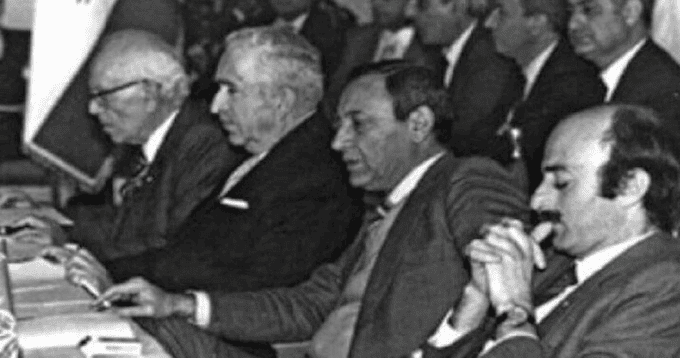
At that time, key Arab states, notably Saudi Arabia and Egypt, discouraged Lebanon from pursuing a bilateral peace agreement with Israel absent a comprehensive Arab-Israeli settlement. Syria, under Hafez al-Assad, was effectively delegated the role of enforcing this position, contributing to the collapse of the May 17 Agreement. The consequences were severe: renewed internal conflict, prolonged instability, economic decline, and a further erosion of Lebanese sovereignty.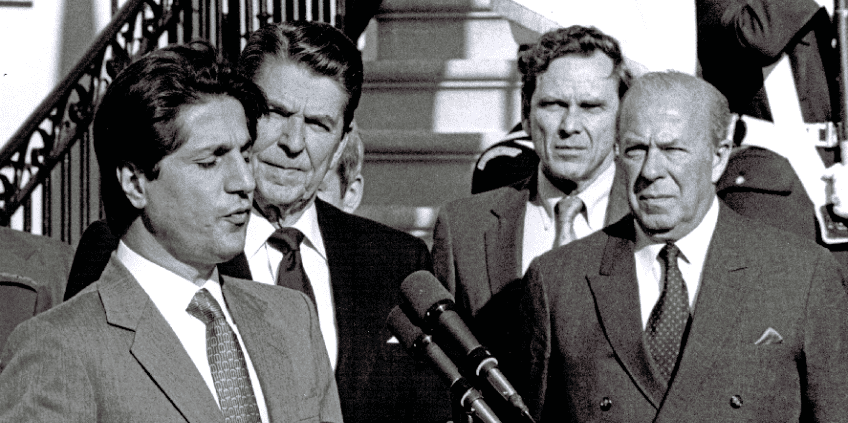
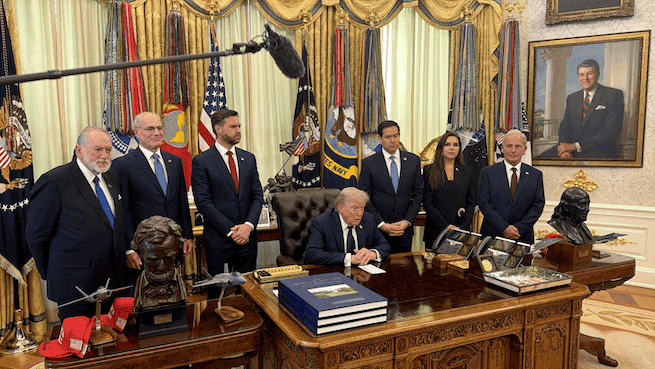
Four decades later, Lebanon again finds itself at a moment of decision. The emergence of a potential U.S.-backed diplomatic track—supported, implicitly or explicitly, by Israel—has reopened the question of whether Lebanon should pursue a limited arrangement aimed at stabilizing its southern frontier and enabling broader economic recovery.
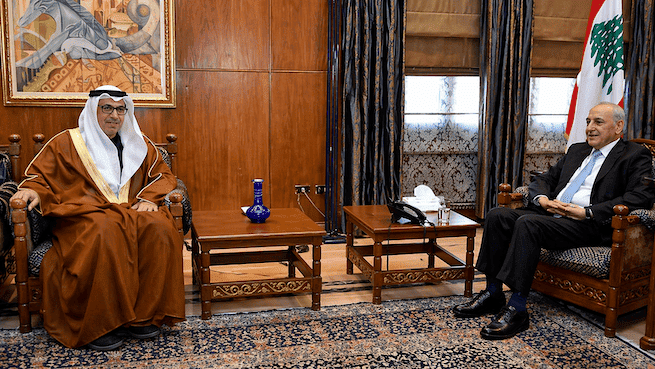
Opposition from Iran and its local allies is predictable and consistent with longstanding strategic interests. More surprising, however, is the posture of states traditionally categorized as “moderate”—including Saudi Arabia, Egypt, and to a degree France. These actors appear less concerned with the substance of any prospective arrangement than with the process through which it is being negotiated—namely, one in which their influence is diminished relative to that of Washington.
This dynamic has translated into calls for caution, internal dialogue, and sequencing—positions articulated through Lebanese intermediaries and political figures. While such arguments are framed in terms of prudence, they risk reproducing the very paralysis that has historically undermined Lebanon’s ability to act in its own interest.
The central question is not whether a comprehensive regional settlement remains desirable—it clearly does—but whether Lebanon can afford to condition its own stabilization on outcomes that are, at best, uncertain and, at worst, indefinitely deferred. The country’s current condition is stark: a collapsed financial system, a weakened military reliant on external support, degraded infrastructure in the south, and a population increasingly inclined toward emigration.
In this context, the costs of inaction are not abstract. They are immediate and cumulative.
What, then, is being offered to Lebanon as an alternative to engagement? To date, there is little evidence of a coordinated effort by these same actors to provide the economic assistance, security guarantees, or political backing necessary to stabilize the Lebanese state. Nor is there a credible strategy to address the structural drivers of instability, including the role of non-state armed actors.
Instead, the prevailing approach appears to favor delay—whether out of concern for regional balance, fear of escalation, or uncertainty about the trajectory of Iran itself. Yet such caution may be misplaced. Iran is under significant internal and external pressure, and its capacity to project power through proxies is not unlimited. Waiting for a more favorable regional equilibrium may, in practice, mean waiting indefinitely.
There is also a broader strategic consideration. Some regional actors may calculate that a weakened but persistent Iran is preferable to the uncertainties that could follow its collapse or realignment. A post-crisis Iran—particularly one that recalibrates its external alignments—could alter the regional balance in ways that challenge existing hierarchies. This possibility, while speculative, may help explain the reluctance to support initiatives that could accelerate change.
For Lebanon, however, the calculus is different. The country does not have the luxury of strategic patience. Its priorities are immediate: restoring economic functionality, reestablishing basic governance, and reducing the likelihood of renewed conflict on its territory.
This does not imply that any agreement should be pursued at any cost. It does suggest, however, that Lebanon’s decision-making should be guided primarily by its own interests rather than by the preferences or anxieties of external actors.
The risk, as in 1983, is that Lebanon once again defers action in deference to a broader consensus that ultimately fails to materialize—leaving it exposed to the very outcomes it sought to avoid.
Avoiding that outcome will require political clarity, institutional coherence, and a willingness to prioritize national stabilization over regional alignment.
The alternative is familiar—and costly.