



After Israel’s “Operation Grim Beeper” neutered Hezbollah, and then an Israeli bunker-buster killed Hezbollah Secretary-General Hassan Nasrallah, there was broad optimism that Hezbollah was finished.
An October 2025 trip to Lebanon suggested otherwise. Customers missing fingers and eyes due to exploding beepers populate coffee shops in Dahiya, Hezbollah’s stronghold in southern Beirut, but most Lebanese said Hezbollah was down but far from out: The group only changed its tactics, both reverting more toward the underground cells which formed the backbone of its operation prior to Israel’s 2000 withdrawal and relying on established allies to impede efforts to uproot the group.
While the Islamic Revolutionary Guard Corps’ land bridge through Iraq and Bashar al-Assad’s Syria dried up, Lebanese Shi’a diaspora communities in West Africa and Latin America continued to launder money for the group. Turkey’s President Recep Tayyip Erdoğan also helped bridge the gap, shipping fresh arms to Hezbollah, sectarian differences notwithstanding.
A March 10, 2026, Israeli strike on Al-Qard al-Hassan, Hezbollah’s bank and money-laundering operation, reportedly incinerated hundreds of millions of dollars Hezbollah was using to pay salaries and purchase goods. But Hezbollah entrenches itself not only with cash, but also with the protection of its political allies.
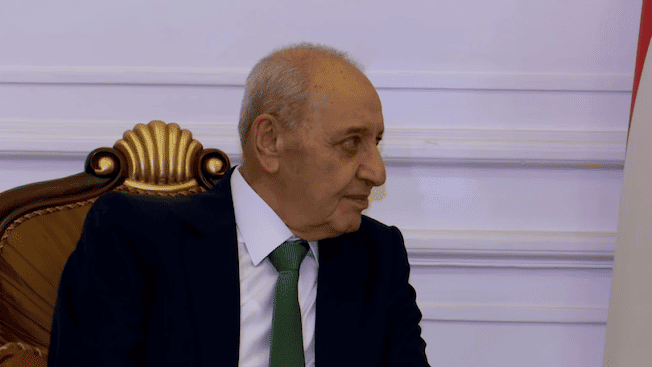
First and foremost, the United States or Israel should eliminate Nabih Berri, Lebanon’s 88-year-old parliamentary speaker and leader of the Shi’i Amal Party. Most Lebanese know Berri and his wife Randa as perhaps the most corrupt couple in Lebanon, a dubious honor given their competition.
Following Nasrallah’s death, Berri scuttled election reform and absentee voting rights in an effort to protect its thirteen seats against the majority of Lebanese Shi’a who despise the group but whom Hezbollah physically preventsfrom returning to their home districts to vote. Berri had one goal only: throwing a lifeline to Hezbollah to protect the status quo, rather than to allowing Lebanon to return to normalcy.
Berri is also the current obstacle to the peace negotiations. Berri drags his feet for various reasons. He awaits material incentives, confusing the current moment with the games of the past, and he hopes to extort constitutional concessions to reinforce the Shi’a within Lebanon’s confessional system.
He is also as craven as he is a coward. He fears becoming a new Kamel Asaad. Also once a speaker of parliament, Asaad endorsed the May 17, 1983, normalization agreement with Israel only to have President Amine Gemayel abandon him.
While Berri is a dinosaur, Lebanon has moved beyond the Cretaceous. Both Hezbollah and its patron Iran are teetering, and longtime ally Syria has switched sides. Israel knocks out two to three southern villages each day. Berri’s Shi’a “leverage” is losing its appeal by the minute.
President Joseph Aoun, a former commander of the Lebanese Armed Forces, should be happy to see Berri go. Aoun had a mandate from day one: deliver a “weapons-free” Hezbollah. Berri has singlehandedly sabotaged this, especially with his party’s control of the Ministry of Finance. He also has placed hand-picked loyalists at the Central Bank to impede efforts to unwind Hezbollah’s tentacles. Headlines might focus on remaining Hezbollah weaponry, but Berri today poses a greater impediment to normalcy and Lebanese sovereignty. His removal—by drone if necessary—would be akin to severing the last shackle holding Lebanon down.
The United States also should act proactively to end the Iran-backed militia threat. No country likes to be bombed, but if executed with precision, Iraqis will forgive because they have become the chief victims of the militias who act in their name. Few Iraqis shed tears for the March 17, 2026, death of Haj Abu Ali al-Askari (Abu Ali al-Amiri) in a targeted strike on a house in the upscale Jadriya neighborhood in Baghdad.
But while Abu Ali played a key role in launching drones inside Iraq on behalf of Iran, Hadi Ameri’s Badr Corps appears focused more on launching missiles. While Hadi is personable and engages with diplomats, including Americans, he is both two-faced and corrupt. His is wholly an Islamic Revolutionary Guard Corps proxy and he takes his orders from Tehran, not Baghdad. For President Donald Trump to end Hadi and family members prepared to succeed him, he will so Iraq as great a favor as the United States provided when it captured Saddam Hussein and later killed Islamic State caliph Abu Bakr al-Baghdad.
The final Iraqi whom the United States should eliminate is Ali Nizar al-Shatari. As the director general of Iraq’s State Oil Marketing Organization, Ali Nizar maintains a respectable face, in theory overseeing crude sales, exports, and strategic partnerships including with Western oil firms. Many Iraqis say and Western analysts confirm that he also channels Iraq’s oil sales proceeds to Iraqi militias including the Badr Corps, Kata’ib Hezbollah, and Asa’ib Ahl al-Haq.
Targeting Mojtaba Khamenei was crucial. He was not only the supreme leader’s son, but as his de facto confidential secretary, he oversaw a vast corruption and embezzlement network. Targeting Ali Nizar would similarly destroy the embezzlement and distribution system within Iraq.
Almost forty-seven years after Ayatollah Ruhollah Khomeini’s declaration of the Islamic Republic, Trump must recognize what his predecessors too often in practice did not: Armed militias are the tip of the iceberg for terrorist groups. Their economic nodes and accountants are just as important to their operations as their armed commanders.
Likewise, terrorists might shed camouflage for business suits and can trim their beards to play the role of politician, but the White House, State Department, Pentagon, and intelligence community should judge them on their actions and ideology, not on the veneer of respectability with which they paint themselves. Sometimes, the pathway to peace arrives via Predator