



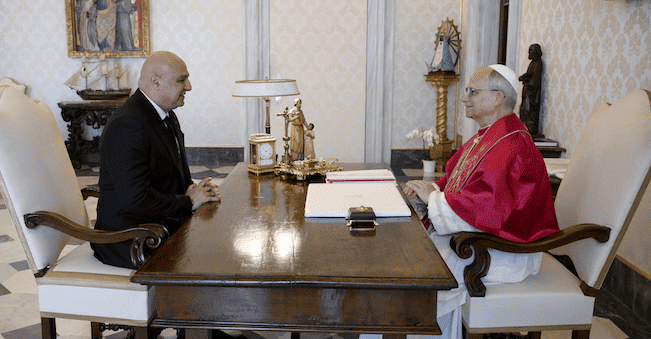
COMMENTARY: To call for peace in Lebanon, much less for ‘positive and active neutrality,’ is to signal clear opposition to the perpetual war and revolution axis.
That Pope Leo would add Lebanon to his first international trip is a signal of both the country’s importance and crisis situation.
Lebanon may not be very important on the world stage. But what gives it weight in the Vatican is that it is indeed a real bastion of Eastern Christianity, especially Catholic Christianity. With a Christian percentage of “only” 37% of the population, it has an influential critical mass of Christians within the population as a whole not seen anywhere else in the Middle East. And in a not insignificant part of Lebanon — from Bsharre in the north to East Beirut in the south, from the coast to Zahleh — Christians are still the overwhelming majority of the population, something which is tangible in the store and street signs, sidewalk shrines and numerous churches of this region.
But the great issue or crisis in Lebanon is not Muslim-Christian relations. Those relations exist and have tended to be mostly cordial. Lebanon’s problem is sectarian only to the extent that it reflects much more dire political divisions in the country.
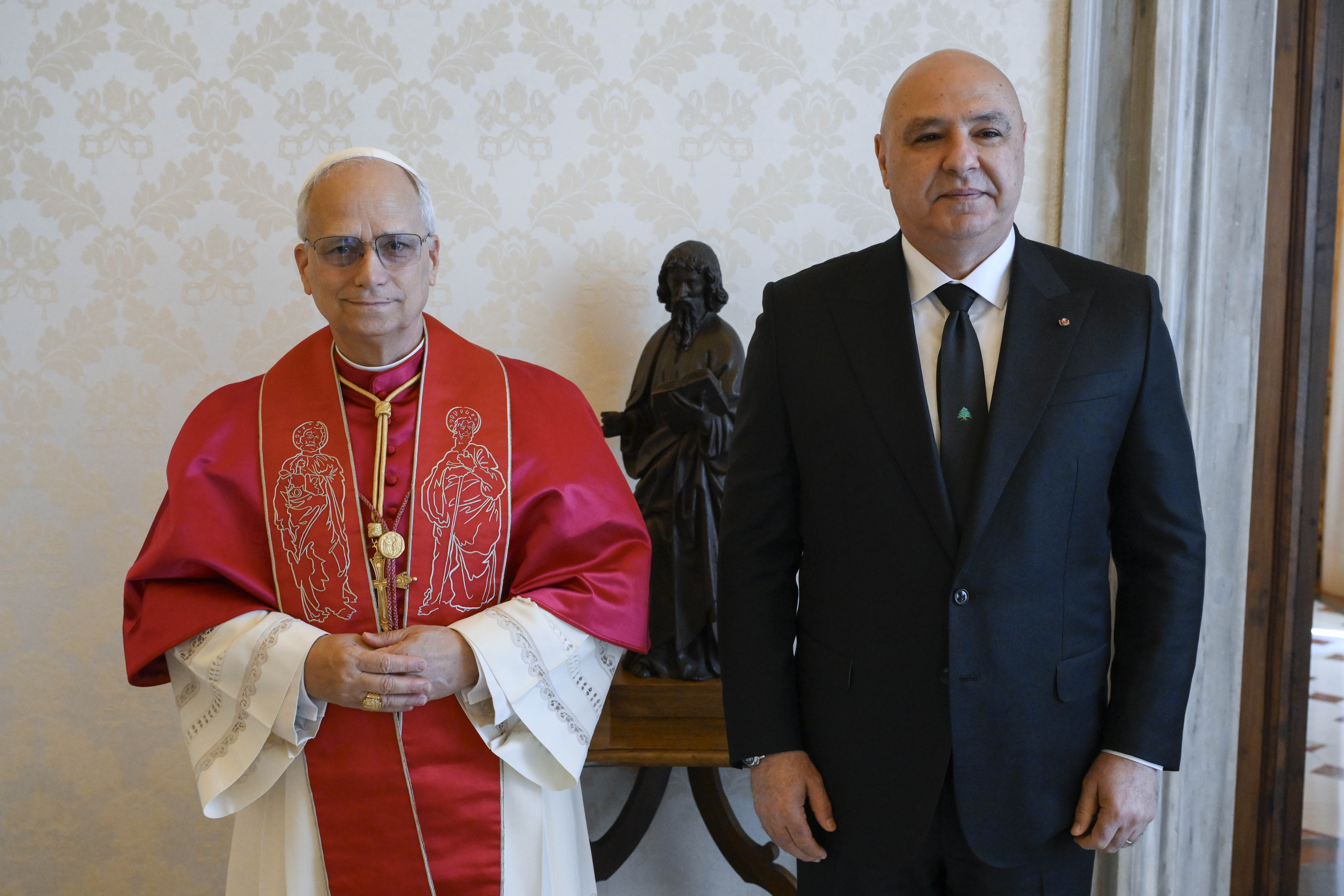
On one side are those Lebanese who want to see their country flourish as a normal country at peace with itself and neutral from the violent conflicts that have wracked the region for decades. Lebanon’s Maronite Catholic Patriarch Bechara Rai, the country’s most influential churchman, has called for “an active and positive stance of neutrality.” Cardinal Rai explained that “positive neutrality is a political doctrine that avoids alignment with conflicting regional or international blocs while remaining committed to just causes globally, such as the right of peoples to independence.” Put more bluntly, the patriarch wishes the Palestinian people every success. But he doesn’t want to see Lebanon sacrificed on an altar of perpetual war and turmoil for foreign causes, whether that is under the banner of Palestine or Iran or anyone else.
In stark opposition to this axis of positive neutrality epitomized by the patriarch and many other Lebanese, Christian and Muslim is another axis that one might dub the axis of perpetual revolution represented by the Iranian-supported terror group Hezbollah and its political and armed allies in Lebanon, which include both Muslims and some Christians. The axis of perpetual revolution is the latest iteration of a calamity inflicted upon Lebanon — often with some very real Lebanese acquiescence — for more than 50 years. First it was Lebanon as a platform for revolution in the Arab world and war against Israel. Beirut was called the Hanoi or Stalingrad of the Arabs. Lebanon — or that considerable part of it that was not controlled by Lebanese Christians — was a hostage to the Palestinian nationalist cause, which would then morph into being a hostage to Syrian Assad regime aspirations and finally into serving as a hostage to Iranian regional ambitions. Arafat, Assad, Hezbollah leader Hassan Nasrallah had different visions, but the impact on Lebanon was the same: to make the country into a tool for others, for their statecraft and violence.
To call for peace in Lebanon, much less for “positive and active neutrality” is to signal clear opposition to the perpetual war and revolution axis. That is the great divide in Lebanon, not necessarily religion. There have been Christians who, either out of conviction or deep cynicism and self-interest, favored the Hezbollah-led axis, such as former President Michel Aoun and his party. And there are Christians that never did.
Some Christians, like former minister and parliamentarian Pierre Amine Gemayel, paid the ultimate price of assassination for their opposition to the war party. But Mohammad Chatah, a former minister and Sunni Muslim, and Lokman Selim, a Shiite Muslim political activist and publisher, were also assassinated because of their brave opposition to the perpetual war party led by Hezbollah and his allies.
So, amid the flurry of diplomatic protocol, official meetings and religious events associated with a papal visit, the Holy Father will face the challenge of clearly communicating and supporting two causes: solidarity and support for Lebanon’s historic Christian community and support for peace, tranquility and neutrality for all Lebanese. The two causes overlap.
Lebanon’s economic crisis, which sees large numbers of young Christians emigrate in search of a better future, is intimately connected to its political crisis, which is directly linked to the distortions caused in the country by the war party.
All of Lebanon’s other problems — the need for an Israeli withdrawal, the rebuilding of the South, the fight against corruption, social justice, religious tolerance — are ameliorated by a rearranging of the status quo and a moving away from the cycle of constant war and the political economic corruption that comes from Hezbollah as being an army of its own and a state within a state.
A papal message calling for this type of change is not only aligned with the foreign policy of the West towards Lebanon, but also that of most Arab Muslim states, and the hopes of most Lebanese, Christian and Muslim.
