
Close Menu
    Facebook Instagram LinkedIn
    • العربية (Arabic)
    • English
    • Français (French)
    Facebook Instagram LinkedIn
    Middle East Transparent
    • Home
    • Categories
      1. Headlines
      2. Features
      3. Commentary
      4. Magazine
      5. Cash economy
      Featured
      Headlines Samara Azzi

      Correction on “Inside the Bank Audi Play Article”!

      Recent
      28 January 2026

      Correction on “Inside the Bank Audi Play Article”!

      25 January 2026

      Federalism Is the Only Shield Lebanon and Iraq Have Left in a Nuclearizing Middle East

      25 January 2026

      The Panic Seeps to Dodge City

    • Contact us
    • Archives
    • Subscribe
    • العربية (Arabic)
    • English
    • Français (French)
    Middle East Transparent
    You are at:Home»Categories»Headlines»Dubaï and Beirut

    Dubaï and Beirut

    0
    By Antoine Courban on 7 December 2024 Headlines
    إستماع
    Getting your Trinity Audio player ready...


    From La Haye in the Netherlands, a friend sent me this advertisement of a new trendy ice-cream named Dubaï.

     

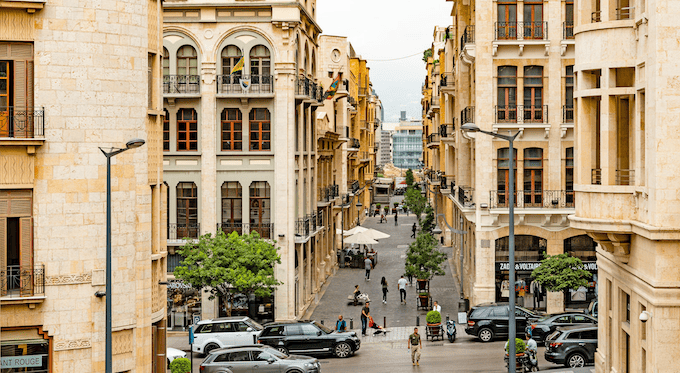
    Dubaï looks more and more as some New-Beirut, cosmopolitan and creative.

    Beirut emerged in the 19th century from nothing. It was a small tiny city of more or less 5.000 to 10.000 inhabitants in 1800.

    And then, due to the Egyptian Ibrahim Pacha and to the Ottoman Sultans, as well as European and American educational missionary congregations, it became the Dubaï of the 19th century when the whole world rushed to this new city so modern, so beautiful, so well managed, so prosperous, so highly educated, at the crossroads of continents.

    This emerging Beirut of the 19th century miraculously knew how to build a transversal “Lebaneseness” crossing all confessional categories.

    This Beirut of yesterday was the showcase of the Arab World and a beacon of modernity.

    In Beirut, the West found a bright and modern East.

    In Beirut, the East found an Arab West.

    Without the city of Beirut, “Great-Lebanon” and its “message” could not have been possible.

    Today, the Lebanon message has been destroyed in its birthplace by ideologies and sectarianism, but it survives elsewhere:  the Lebanese have sent the “message” to other recipients.

    Dubai on the shores of the Gulf has received it.

    The people of Syria, and all Arabs in the Levant, have received it. You only have to listen to these new Syrian figures who have emerged on our TV screens since several days. The speech of these “terrorists” sound amazingly more or less “Lebanese”.

    Nobody can predict what the future holds for all the Levant, but one thing is certain: the Levant of Sykes-Picot and protective mandates has ceased to exist.

    When a new power shall be installed in Damascus, a tsunami of profound changes will take place in the Levant.

    – Religious fundamentalisms will faint probably

    – Minority Identitarianism will become a folklore of the past

    – Zionism itself is doomed to disappear within its own Israeli ghetto

    I know I will not see such a happy end but I remain optimistic and I am sure it will happen. Our children will build it and enjoy it.

    Civilisation, Universal religions and Culture emerged in the Levant. The Levant is not dead, we have more than 6.000 years of civilisation behind us and in our blood.

    December 7th 2024

    acourban@gmail.com

    *Antoine Courban is a professor in medicine and philosophy at the Jesuit University of Beirut


    Share. Facebook Twitter LinkedIn Email WhatsApp Copy Link
    Previous ArticleDesignating Hezbollah fallen combatants as “army martyrs” disastrous
    Next Article Who is responsible?: Hezbollah clashed with Army in “Saint Teresa” and prevented it from seizing its missiles
    Subscribe
    Notify of
    guest
    guest
    0 Comments
    Newest
    Oldest Most Voted
    Inline Feedbacks
    View all comments
    RSS Recent post in french
    • Au Liban, des transactions immobilières de l’OLP suscitent des questions 18 January 2026 L'Orient Le Jour
    • Pourquoi la pomme de la tyrannie tombe-t-elle toujours ? 10 January 2026 Walid Sinno
    • La liberté comme dette — et comme devoir trahi par les gouvernants 2 January 2026 Walid Sinno
    • La « Gap Law »: pourquoi la précipitation, et pourquoi les Français ? 30 December 2025 Pierre-Étienne Renaudin
    • Au Liban, une réforme cruciale pour sortir enfin de la crise 23 December 2025 Sibylle Rizk
    RSS Recent post in arabic
    • “أبو عُمَر”: واحد إم إثنان؟ 28 January 2026 خاص بالشفاف
    • (شاهد الفيديو ولا تضحك): “دويلة تعتقل دولة وتصادر شاحنتي سلاح مُهَرَّب من سوريا! 27 January 2026 إم تي في
    • لِشهرين أم لِسنتين: الانتخابات النيابية مؤجّلة حُكماً! 25 January 2026 كمال ريشا
    • ثرثرة على ضفة الحركة (2): “الفلسطينيّة” و”العربيّة” 25 January 2026 هشام دبسي
    • الهَلَع يتسرَّب إلى دودج سيتي 25 January 2026 خليل يوسف بيدس
    26 February 2011

    Metransparent Preliminary Black List of Qaddafi’s Financial Aides Outside Libya

    6 December 2008

    Interview with Prof Hafiz Mohammad Saeed

    7 July 2009

    The messy state of the Hindu temples in Pakistan

    27 July 2009

    Sayed Mahmoud El Qemany Apeal to the World Conscience

    8 March 2022

    Russian Orthodox priests call for immediate end to war in Ukraine

    Recent Comments
    • Nadim Shehadi on The Panic Seeps to Dodge City
    • Yusuf Kanli on A necessary conversation: On Cyprus, security, and the missing half of the story
    • Mohamed on Inside the Bank Audi Play: How Public Money Became Private Profit
    • JudgmentalOne on A necessary conversation: On Cyprus, security, and the missing half of the story
    • Drivers Behind Audi’s Top-Level Management Shake-Up - Middle East Transparent on Lebanon’s banks are running out of excuses
    Donate
    © 2026 Middle East Transparent

    Type above and press Enter to search. Press Esc to cancel.

    wpDiscuz