



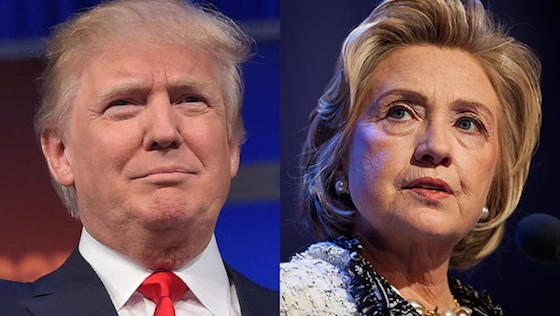
With a few exceptions, the candidates focused more on debating the past than offering ideas and prescriptions for today’s Middle East challenges.
Apart from the rants, attacks, and insults, when it came to Middle East issues, last night’s debate was like an old and broken record — rehashing disputes over the Iraq war (2003), the withdrawal of troops from that country (2011), and the Iran nuclear deal (2015). As important as clarity on those issues may be, there was regrettably little discussion of pressing issues the next president is sure to face on Inauguration Day.
These include:
Syria. The most glaring foreign policy lacuna in the debate was the almost complete omission of the world’s most pressing strategic cum humanitarian challenge. With Russian and Syrian bombs falling on civilians in Aleppo, the candidates offered no hint that they would ditch what one could call President Obama’s policy of “strategic indifference” and implement a more robust approach — one designed to create strategic balance on the ground in order to compel the Moscow-Tehran-Damascus axis to negotiate a political resolution.
The Islamic State. In terms of the fight against IS, both candidates replayed stock lines from stump speeches. Overall, Hillary Clinton’s paragraph on defeating the group was much more detailed than Donald Trump’s; it included support for Kurdish and Arab allies, a focus on targeting IS leadership, and a sequence of action (liberate Mosul by the end of 2016, then focus on squeezing the group in Raqqa), all done with enhanced U.S. air support but not ground forces. For his part, Trump did not go far beyond a commitment to massive military action against IS, falling back on his critique that the Obama administration permitted the group’s rise by precipitously withdrawing U.S. forces from Iraq and mishandling Libya. Neither candidate, however, addressed what most experts believe to be the most serious challenge — what to do the day after liberating IS-held territory so that it does not become the base for the next iteration of radical Sunni jihadists.
Iran. Clinton and Trump spent considerable time jousting over the wisdom of the Iran nuclear accord, including Trump’s remark that Israeli prime minister Binyamin Netanyahu remains displeased with the deal. However, the Republican candidate offered no specific alternative to the existing agreement, and the Democratic candidate offered no detailed suggestions to push back against Tehran’s success in taking advantage of the deal to extend Iranian influence throughout the region.
Allies. About seventy-five minutes into the debate, Clinton made an overlooked but important reference to strengthening alliances in the Middle East as part of the strategy to confront common adversaries. And later, she made a welcome, straight-into-the-camera pledge about fulfilling commitments to U.S. allies around the globe. Yet, with specific reference to the Middle East, neither candidate followed up with details on how to pursue what is sure to be a major policy theme differentiating them from President Obama’s perceived focus on reaching out to adversaries more than strengthening partnerships with allies.
Missed Opportunities. Interestingly, neither candidate took the opportunity to score points on certain popular Middle East policy themes. Clinton, for example, could have distanced herself from Obama by mentioning her support for the Justice Against Sponsors of Terrorism Act (JASTA), which would lift Saudi Arabia’s diplomatic immunity for charges of complicity in the September 11 attacks. The president has vetoed the legislation, but she has backed it. For his part, Trump did not repeat his promise to recognize Jerusalem as Israel’s capital, long a staple of Republican presidential aspirants. More broadly, he did not critique Clinton for her role in an administration that Republicans and other critics view as cool and distant toward Israel, though reaching the bilateral $38 billion Memorandum of Understanding on military assistance earlier this month may have insulated her from that line of attack.
Of course, national security — and within it, the Middle East — was just one of several themes addressed last night. The candidates will have further opportunity to tackle the agenda ahead, rather than rehash differences over the past, when they square off in their next two debates.
Robert Satloff is the executive director of The Washington Institute.