



(Shaffaf Exclusive)
I went to Beirut for a week and found two cities living on top of each other, like mismatched transparencies that refuse to align.
The first Beirut was quiet, unnaturally so. Not peaceful, but hollowed out. Bars stood open but empty, as if waiting for a crowd that had collectively decided to stay home out of respect, fear, or exhaustion, no one could quite tell which. Lovers had disappeared. Restaurants, once loud with clinking glasses and arguments about politics or art or nothing at all, now stretched their tables like unanswered questions: how long can they survive like this? The waiters, fewer than before, moved carefully, politely, anxiously—men who knew that silence does not pay salaries.
In Ashrafieh the eastern part of Beirut, the lights went out early. By 8 p.m., the streets seemed to fold into themselves. Beirut, the city that used to resist sleep like a point of pride, now surrendered to darkness without a fight.
And then there was the second Beirut.
I met it on a Wednesday midday, while I was having lunch on the terrace of my apartment. It was one of those deceptively calm moments, the kind that tricks you into believing nothing will happen. Then it did.
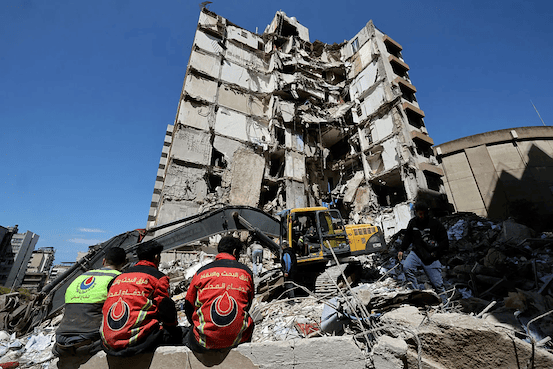
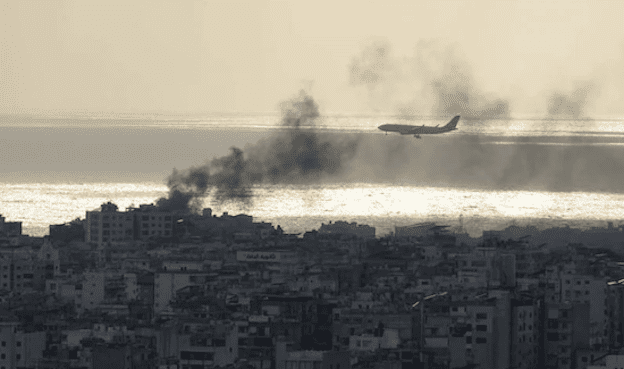
Across the city, rockets began to cut through the sky. I had never lived a war before; the sound was unfamiliar, almost abstract at first, like something borrowed from a film. I stood there with my camera open, instinctively trying to capture it, to frame it, until I realized that what I was looking at was not a scene but a building collapsing into itself. A whole structure gone in seconds. Black smoke rising like a curtain.
Then the city broke.
Cars rushed past at impossible speeds, some going against one-way traffic, all of them trying to escape toward the part of town where I was standing, as if my side of town had suddenly become safer by accident. Chaos followed, horns blaring, people shouting, the kind of noise that doesn’t just fill the air but presses into your chest.
I didn’t know what to do. Shelter? Stay? Leave? There’s no manual for your first war.
So I went to the kitchen and poured myself a drink. Cognac—my favorite, my long-standing anti-anxiety ritual. It felt absurd and perfectly logical at the same time. Then I returned to the terrace, lit a cigar, and sat back down as if I could negotiate with the moment.
But the black smoke was moving closer now, slowly encircling my side of town. It carried with it a sharp, metallic smell—kabrit. It occurred to me, with a strange clarity, that I had choices: inhale the smoke of war outside, or the smoke of my own making inside.
Perspective, in Beirut, is a sliding scale.
I chose the cigar indoors.
Later, I stepped out to meet friends at a nearby coffee shop. Somehow, they had missed it—or maybe they hadn’t, but in Beirut, missing something and choosing to move past it can look the same. We sat, watching the news update itself in real time: 200 dead. 300. More missing. Numbers rising like the smoke I had just left behind.
Outside, ambulances screamed through the streets. Traffic refused to yield. The city insisted on moving, even as it bled.
Inside, my friend smoked shisha, slow and steady. Another sent his driver out to find me a cigar, as if maintaining small rituals was our way of pushing back against the scale of everything else.
The next day, Beirut reset.
In my part of town, life resumed its usual rhythm. Lunch with friends. A laptop open at a café. Emails answered. Conversations drifting back to the ordinary. No one spoke much about the night before. Not because it didn’t matter, but because in Beirut, there is always a next thing waiting and you save your energy for that.
This is how Beirut rolls. From one mini-war to the next. We dust off, straighten our clothes, relight our cigarettes, and carry on. Not out of resilience in the romantic sense, but because stopping is not an option anyone has learned.
The danger of war is not just in its violence—it’s in how quickly it becomes part of the background. How it teaches a city to normalize the abnormal. How it lets people sit between sirens and smoke, debating whether the greater risk is outside or within.
Two Beiruts: one eerily quiet, the other violently alive.
Both, somehow, the same city.