
Close Menu
    Facebook Instagram LinkedIn
    • العربية (Arabic)
    • English
    • Français (French)
    Facebook Instagram LinkedIn
    Middle East Transparent
    • Home
    • Categories
      1. Headlines
      2. Features
      3. Commentary
      4. Magazine
      5. Cash economy
      Featured
      Headlines Khalil Youssef Beidas

      The Panic Seeps to Dodge City

      Recent
      25 January 2026

      Federalism Is the Only Shield Lebanon and Iraq Have Left in a Nuclearizing Middle East

      25 January 2026

      The Panic Seeps to Dodge City

      23 January 2026

      Inside the Bank Audi Play: How Public Money Became Private Profit

    • Contact us
    • Archives
    • Subscribe
    • العربية (Arabic)
    • English
    • Français (French)
    Middle East Transparent
    You are at:Home»Categories»Features»Diverging Saudi and Emirati priorities will likely undermine campaign in Yemen, sustaining threat of jihadist expansion

    Diverging Saudi and Emirati priorities will likely undermine campaign in Yemen, sustaining threat of jihadist expansion

    0
    By Jane's on 6 November 2015 Features
    Meda Al Rowas – IHS Jane’s Intelligence Review

    Key Points

    • The Saudi-led coalition is struggling to organise and co-ordinate its Yemeni proxies, which is prompting infighting but also contributing to a growing jihadist presence and activity in Aden and elsewhere.
    • Expanding jihadist activity is likely to further reduce Saudi Arabia’s and the UAE’s appetites for relying on their own ground forces, resorting instead to contingents of non-GCC forces and Yemeni proxies for offensive and security operations.
    • The coalition’s failure to secure any major Yemeni province after months of conflict will probably ensure tribal groups across the country continue to prioritise cultivating their relationships with local non-state armed groups and factions controlling patronage networks, including with the Houthi Movement, former president Ali Abdullah Saleh and Al-Qaeda in the Arabian Peninsula (AQAP) in particular, as opposed to committing to supporting the coalition’s ongoing military operations, or any government it is backing.

    EVENT

    Presidential guards at the Maasheeq palace in Aden fought on 3 November with militiamen in southern popular committees due to delays in the latter’s salary payments; popular committees are fragmented local forces that are tasked with manning checkpoints and policing the city.

    The Saudi-led coalition has so far failed to guarantee security in Aden, or to facilitate the relocation of the Yemeni government from its temporary base in Riyadh, since the city’s capture from Houthi Movement militias and defected military forces loyal to former president Ali Abdullah Saleh in July 2015. Delayed wages and infighting between pro-government forces in Aden indicates that the coalition is struggling to unify and co-ordinate fragmented local forces.

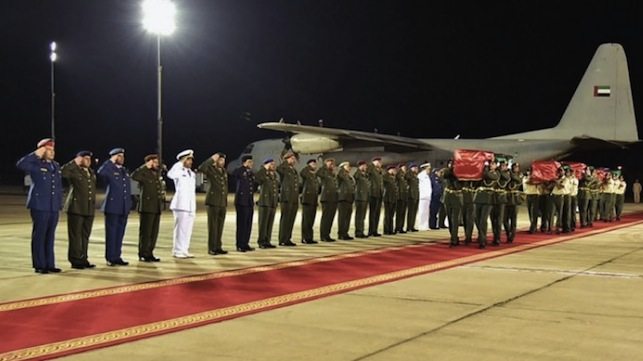
    Jihadists have been exploiting the sustained security vacuum in Aden to maintain an assassination and improvised explosive device (IED) attack campaign targeting pro-government forces and officials, and effectively undermining state authority. The latest confirmed attack specifically targeting United Arab Emirates forces involved a fatal drive-by shooting, which killed an Emirati serviceman on 17 October.

    Janes

    Share. Facebook Twitter LinkedIn Email WhatsApp Copy Link
    Previous ArticleNew Kuwaiti Survey Reveals Sectarian Divide, Concerns About Iran
    Next Article The Not-So-Great Game in Syria, and How to End It
    Subscribe
    Notify of
    guest
    guest
    0 Comments
    Newest
    Oldest Most Voted
    Inline Feedbacks
    View all comments
    RSS Recent post in french
    • Au Liban, des transactions immobilières de l’OLP suscitent des questions 18 January 2026 L'Orient Le Jour
    • Pourquoi la pomme de la tyrannie tombe-t-elle toujours ? 10 January 2026 Walid Sinno
    • La liberté comme dette — et comme devoir trahi par les gouvernants 2 January 2026 Walid Sinno
    • La « Gap Law »: pourquoi la précipitation, et pourquoi les Français ? 30 December 2025 Pierre-Étienne Renaudin
    • Au Liban, une réforme cruciale pour sortir enfin de la crise 23 December 2025 Sibylle Rizk
    RSS Recent post in arabic
    • لِشهرين أم لِسنتين: الانتخابات النيابية مؤجّلة حُكماً! 25 January 2026 كمال ريشا
    • ثرثرة على ضفة الحركة (2): “الفلسطينيّة” و”العربيّة” 25 January 2026 هشام دبسي
    • الهَلَع يتسرَّب إلى دودج سيتي 25 January 2026 خليل يوسف بيدس
    • قضية “بنك عودة”: كيف تحوّلت الأموال العامة إلى أرباح خاصة 24 January 2026 سمارة القزّي
    • حوارٌ ضروري حول قبرص، والأمن، ونصف القصة الغائب 24 January 2026 يوسف كانلي
    26 February 2011

    Metransparent Preliminary Black List of Qaddafi’s Financial Aides Outside Libya

    6 December 2008

    Interview with Prof Hafiz Mohammad Saeed

    7 July 2009

    The messy state of the Hindu temples in Pakistan

    27 July 2009

    Sayed Mahmoud El Qemany Apeal to the World Conscience

    8 March 2022

    Russian Orthodox priests call for immediate end to war in Ukraine

    Recent Comments
    • Nadim Shehadi on The Panic Seeps to Dodge City
    • Yusuf Kanli on A necessary conversation: On Cyprus, security, and the missing half of the story
    • Mohamed on Inside the Bank Audi Play: How Public Money Became Private Profit
    • JudgmentalOne on A necessary conversation: On Cyprus, security, and the missing half of the story
    • Drivers Behind Audi’s Top-Level Management Shake-Up - Middle East Transparent on Lebanon’s banks are running out of excuses
    Donate
    © 2026 Middle East Transparent

    Type above and press Enter to search. Press Esc to cancel.

    wpDiscuz