


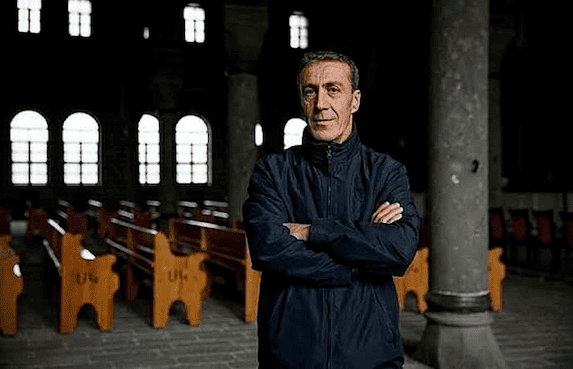
He grew up with a Kurdish identity, carrying a family history formed by the violence of 1915. At 25, he learned he was Armenian. He spent the rest of his life reclaiming that past and helping restore a place for it in the city he loved.
“I wanted to live and die with Armenian history, culture, art, identity and music,” Armen Demirciyan once said. He spoke with a wry smile about the word babfıle—“infidel’s child”—a name some used to wound him and others, he recalled, with affection.
Born in Lice in 1961, Demirciyan was registered as Abdürrahim Zorarslan and raised Muslim in a predominantly Kurdish community. His father, Agop, also known as Habok, was four years old in 1915 when a Kurdish family rescued and sheltered him, then raised him as a Muslim. Other members of the family, including Demirciyan’s grandparents and uncles, were killed. The family’s Armenian origins survived in fragments, buried beneath the identity that had offered a child a chance to live.
At about 25, Demirciyan learned the truth from village elders. He began to piece together a family scattered by catastrophe, tracing relatives in Europe and the United States and learning Armenian. He also adopted the name Armen Demirciyan, honouring the family history he had been denied. Accounts differ on whether he was baptised; what is clear is that he publicly embraced his Armenian ancestry and made its language and culture central to his life.
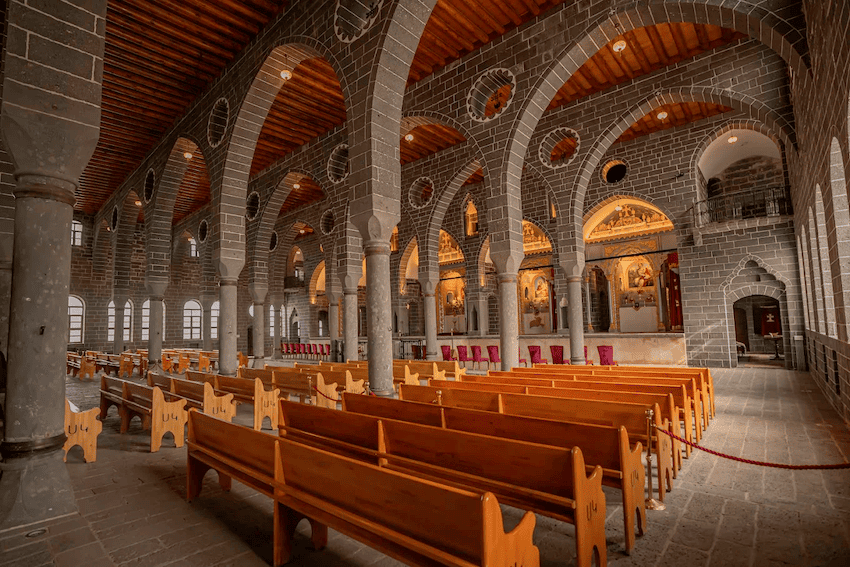
That journey brought him to Surp Giragos, the monumental Armenian church in Diyarbakır’s historic Sur district. Its bell tower was demolished in 1915. The church complex later served other uses, including as a military facility and a state warehouse, before the Armenian community reclaimed and restored it. Reopened for worship in 2011, Surp Giragos became a centre of renewed cultural and communal life. Demirciyan volunteered there, worked on its grounds, cleaned its halls and welcomed visitors. When the church was vandalised and looted in 2017, he spoke openly of his grief.
For Demirciyan, the church was not only a building to care for. It was proof that a community’s presence in Diyarbakır had not been erased completely. He helped people encounter that history, and shared Agos, the Istanbul-published Armenian weekly, with others whose families carried concealed pasts of their own.
The scale of that erasure is written into the province’s history. In 1915, Diyarbekir was governed by Dr. Mehmed Reşid, whom historians identify as a principal organiser of the persecution and killing of Armenians and other Christian communities there. Estimates of the Christian dead and missing under his rule range from about 144,000 to 157,000. The governor appears at the opening of Kemal Tahir’s historical novel Yorgun Savaşçı (The Weary Warrior), a reminder that the violence and its aftermath have also occupied Turkish literature, even as much of this history remains little known beyond specialist circles.
Demirciyan died on 5 November 2026, aged 65. His death leaves Diyarbakır without one of its most visible living witnesses to the Armenian past. He could not restore the lives, language or kinship networks destroyed across generations. But by reclaiming his name, tending Surp Giragos and telling his story, he made that past present again, in the city, and in the memory of those who listened.
*Yusuf Kanlı is a veteran journalist and editor with nearly 50 years of experience. A former editor-in-chief of Turkish Daily News, Hurriyet Daily News, he writes on geopolitics and press freedom. He is also the author of The Anatolian Fire, on Eurasian myths and legends