
Close Menu
    Facebook Instagram LinkedIn
    • العربية (Arabic)
    • English
    • Français (French)
    Facebook Instagram LinkedIn
    Middle East Transparent
    • Home
    • Categories
      1. Headlines
      2. Features
      3. Commentary
      4. Magazine
      5. Cash economy
      Featured
      Headlines Khalil Youssef Beidas

      The Panic Seeps to Dodge City

      Recent
      25 January 2026

      Federalism Is the Only Shield Lebanon and Iraq Have Left in a Nuclearizing Middle East

      25 January 2026

      The Panic Seeps to Dodge City

      23 January 2026

      Inside the Bank Audi Play: How Public Money Became Private Profit

    • Contact us
    • Archives
    • Subscribe
    • العربية (Arabic)
    • English
    • Français (French)
    Middle East Transparent
    You are at:Home»Categories»Commentary»A new Taliban breakaway group claims support for peace and women’s rights

    A new Taliban breakaway group claims support for peace and women’s rights

    0
    By The Washington Post on 10 November 2015 Commentary, Features
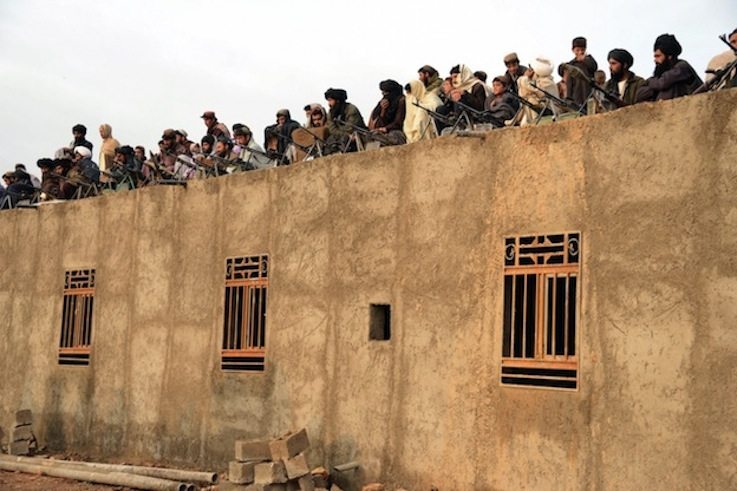
    Afghan Taliban fighters listen to Mullah Mohammad Rasool Akhund (unseen), the newly appointed leader of a breakaway faction of the Taliban, at Bakwah in the western province of Farah. Mullah Rasool was named the leader of the faction in a mass gathering of dissident fighters this week in the remote southwestern province of Farah. AFP PHOTO / Javed Tanveer/AFP/Getty Images (Javed Tanveer/AFP/Getty Images)
    By Sudarsan Raghavan
    KABUL — A new Taliban splinter faction claimed Sunday that it was ready to engage in peace talks with the government and that it would allow women to be educated and to work. If genuine, this suggests a distinct split with the insurgents’ core leadership.“We have realized this now, that under an Islamic system all rights of human beings — both men and women — need to be implemented 100 percent,” Abdul Manan Niazi, the deputy head of the breakaway group, told the BBC’s Dari service.The group emerged last week at a meeting of Taliban fighters in western Farah province, appointing a former Taliban governor, Mohammad Rasool, as its leader. It is unclear how much support within the insurgency the new faction has. But it does represent a direct challenge to Akhtar Mohammad Mansour, who took control of the movement after it emerged this summer that the Taliban’s supreme leader Mohammad Omar had been dead for more than two years.The faction is the latest sign of the deepening divisions inside the Taliban, which has steadily fragmented throughout this year. Some Taliban commanders have drifted away from the movement’s core leadership, based in the Pakistani city of Quetta, running operations or securing funds on their own. Others have defected and joined the Islamic State. The splintering, as well as the violence, have increased following the announcement of Omar’s death, as many Taliban rejected the swift ascension of Mansour, accusing him of suppressing the news of the death for his personal gain.

    The new faction, reportedly filled with influential Taliban, is believed to be the first formal split inside the movement since it emerged in the mid-1990s and seized power in 1996. Rasool, the faction’s leader, served as governor of Farah and Nimroz provinces under the Taliban regime until it was toppled by the U.S.-led intervention following the Sept. 11, 2001, attacks. He is believed to have been close to Omar.

    His group has a tough task ahead. Mansoor is widely thought to have strengthened his hold on the movement with recent military victories, in particular the 15-day seizure of the northeastern city of Kunduz, the first major urban area to fall to the insurgents since 2001.

    On Sunday, Rasool’s group sought to portray itself as more open-minded than the core leadership. In the BBC interview, Niazi, a former Taliban governor, said that Mansoor had killed Omar, although he did not offer any evidence. He also called for an end to infighting among all Afghans. And he said the group did not approve of the use of suicide bombings and other types of attacks on Afghan military and civilian officials.

    “From now on, we Afghans are not in favor of revenge seeking,” Niazi said.

    He added that the recent Taliban attacks in Kabul and the takeover of Kunduz in late September had been “launched for Mansoor’s personal power.”

    “We announce to all Afghans that it is enough and to put aside Afghan fratricide,” Niazi said. “Let us find out who the source of the war in Afghanistan is, and where it comes from and how to prevent it.”

    At the same time, Niazi echoed the Taliban’s core leadership when it came to peace talks: No discussions should occur unless all U.S. and foreign troops depart the country.

    In the past three days, he said, the breakaway faction had held several emergency meetings in the western part of the country and were planning to hold more gatherings in the northern areas to gain more support and recruits.

    Sayed Salahuddin contributed to this report.

    The Washington Post
    Share. Facebook Twitter LinkedIn Email WhatsApp Copy Link
    Previous ArticleICSS director of integrity Chris Eaton reading the riot act to FIFA, the IOC and all establishment figures in sport
    Next Article Held Together by Bruises, This Land Must Be Divided
    Subscribe
    Notify of
    guest
    guest
    0 Comments
    Newest
    Oldest Most Voted
    Inline Feedbacks
    View all comments
    RSS Recent post in french
    • Au Liban, des transactions immobilières de l’OLP suscitent des questions 18 January 2026 L'Orient Le Jour
    • Pourquoi la pomme de la tyrannie tombe-t-elle toujours ? 10 January 2026 Walid Sinno
    • La liberté comme dette — et comme devoir trahi par les gouvernants 2 January 2026 Walid Sinno
    • La « Gap Law »: pourquoi la précipitation, et pourquoi les Français ? 30 December 2025 Pierre-Étienne Renaudin
    • Au Liban, une réforme cruciale pour sortir enfin de la crise 23 December 2025 Sibylle Rizk
    RSS Recent post in arabic
    • لِشهرين أم لِسنتين: الانتخابات النيابية مؤجّلة حُكماً! 25 January 2026 كمال ريشا
    • ثرثرة على ضفة الحركة (2): “الفلسطينيّة” و”العربيّة” 25 January 2026 هشام دبسي
    • الهَلَع يتسرَّب إلى دودج سيتي 25 January 2026 خليل يوسف بيدس
    • قضية “بنك عودة”: كيف تحوّلت الأموال العامة إلى أرباح خاصة 24 January 2026 سمارة القزّي
    • حوارٌ ضروري حول قبرص، والأمن، ونصف القصة الغائب 24 January 2026 يوسف كانلي
    26 February 2011

    Metransparent Preliminary Black List of Qaddafi’s Financial Aides Outside Libya

    6 December 2008

    Interview with Prof Hafiz Mohammad Saeed

    7 July 2009

    The messy state of the Hindu temples in Pakistan

    27 July 2009

    Sayed Mahmoud El Qemany Apeal to the World Conscience

    8 March 2022

    Russian Orthodox priests call for immediate end to war in Ukraine

    Recent Comments
    • Nadim Shehadi on The Panic Seeps to Dodge City
    • Yusuf Kanli on A necessary conversation: On Cyprus, security, and the missing half of the story
    • Mohamed on Inside the Bank Audi Play: How Public Money Became Private Profit
    • JudgmentalOne on A necessary conversation: On Cyprus, security, and the missing half of the story
    • Drivers Behind Audi’s Top-Level Management Shake-Up - Middle East Transparent on Lebanon’s banks are running out of excuses
    Donate
    © 2026 Middle East Transparent

    Type above and press Enter to search. Press Esc to cancel.

    wpDiscuz