
Close Menu
    Facebook Instagram LinkedIn
    • العربية (Arabic)
    • English
    • Français (French)
    Facebook Instagram LinkedIn
    Middle East Transparent
    • Home
    • Categories
      1. Headlines
      2. Features
      3. Commentary
      4. Magazine
      5. Cash economy
      Featured
      Headlines Khalil Youssef Beidas

      The Panic Seeps to Dodge City

      Recent
      28 January 2026

      Correction on “Inside the Bank Audi Play Article”!

      25 January 2026

      Federalism Is the Only Shield Lebanon and Iraq Have Left in a Nuclearizing Middle East

      25 January 2026

      The Panic Seeps to Dodge City

    • Contact us
    • Archives
    • Subscribe
    • العربية (Arabic)
    • English
    • Français (French)
    Middle East Transparent
    You are at:Home»Categories»Commentary»Riyadh Looks to Moscow

    Riyadh Looks to Moscow

    0
    By Simon Henderson on 18 June 2015 Commentary

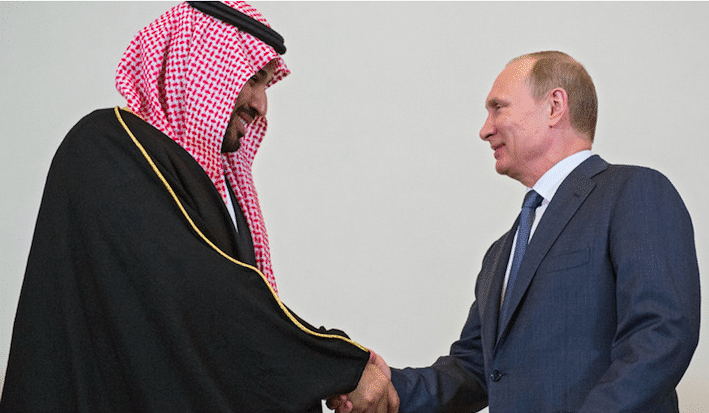
    Prince Muhammad’s visit to Russia will increase speculation that Saudi Arabia’s relationship with the United States is changing.

    On June 17, Saudi deputy crown prince and defense minister Muhammad bin Salman (a.k.a. MbS) arrived in Russia to meet with President Vladimir Putin. The visit, which was kept secret until a few hours before he left the kingdom, follows a series of recent communications between Putin and the prince’s father, King Salman. In April, the two spoke by telephone, and on May 27, a Russian special envoy met with the king the day before the new Saudi ambassador presented his credentials in Moscow. Speaking this week, the Saudi envoy spoke of the “deeply rooted historical ties and the permanent evolution” of the relationship between the two countries.

    In reality, bilateral relations have been awkward if not antagonistic. King Salman’s father, King Abdulaziz, loathed “godless communists” and broke diplomatic relations with the Soviet Union in 1938. It was not until 1992 — after the Red Army’s defeat in Afghanistan at the hands of Saudi-backed mujahedin fighters and the subsequent collapse of the Soviet Union — that ties with Moscow were reestablished.

    Given MbS’s growing prominence at home and his obvious closeness to his father — who seems to use him as a special envoy in addition to his other responsibilities — the possibility of significant upgrades to the Saudi-Russian relationship seems likely. Under King Abdullah, who died in January, ties were vexed by Moscow’s support for Bashar al-Assad’s regime in Syria. Former Saudi intelligence chief Prince Bandar bin Sultan visited Russia at least twice but failed to change Putin’s mind about backing Damascus.

    The Saudi Royal Court’s official statement announcing MbS’s trip described it as an opportunity “to discuss relations and aspects of cooperation between the two friendly countries.” The agenda likely includes oil, a sector in which the prince has become a key decisionmaker. Saudi determination to retain market share even at the cost of lower revenues has hit Russia hard. For his part, Putin will want to further widen differences between Riyadh and Washington on the wisdom of a nuclear deal with Iran.

    After the recent Camp David meeting, President Obama described MbS — who may only be twenty-nine years old — as “wise beyond his years.” The established Washington view is that the bilateral relationship is safe because of the administration’s closeness with Crown Prince Muhammad bin Nayef (a.k.a. MbN) and new foreign minister Adel al-Jubeir, formerly the ambassador to the United States. But the king seems to favor his son over MbN, and it is likely significant that Jubeir was not sent on the Russia trip. Whatever MbS returns home with, it may prove important to the future of the U.S.-Saudi relationship.

    ******************************

    Simon Henderson is the Baker Fellow and director of the Gulf and Energy Policy Program at The Washington Institute.


    Share. Facebook Twitter LinkedIn Email WhatsApp Copy Link
    Previous ArticleDruze Mount next flashpoint in Syrian conflict: Implications for Israel
    Next Article Druze Mount next flashpoint in Syrian conflict: Implications for Israel
    Subscribe
    Notify of
    guest
    guest
    0 Comments
    Newest
    Oldest Most Voted
    Inline Feedbacks
    View all comments
    RSS Recent post in french
    • Au Liban, des transactions immobilières de l’OLP suscitent des questions 18 January 2026 L'Orient Le Jour
    • Pourquoi la pomme de la tyrannie tombe-t-elle toujours ? 10 January 2026 Walid Sinno
    • La liberté comme dette — et comme devoir trahi par les gouvernants 2 January 2026 Walid Sinno
    • La « Gap Law »: pourquoi la précipitation, et pourquoi les Français ? 30 December 2025 Pierre-Étienne Renaudin
    • Au Liban, une réforme cruciale pour sortir enfin de la crise 23 December 2025 Sibylle Rizk
    RSS Recent post in arabic
    • “أبو عُمَر”: واحد إم إثنان؟ 28 January 2026 خاص بالشفاف
    • (شاهد الفيديو ولا تضحك): “دويلة تعتقل دولة وتصادر شاحنتي سلاح مُهَرَّب من سوريا! 27 January 2026 إم تي في
    • لِشهرين أم لِسنتين: الانتخابات النيابية مؤجّلة حُكماً! 25 January 2026 كمال ريشا
    • ثرثرة على ضفة الحركة (2): “الفلسطينيّة” و”العربيّة” 25 January 2026 هشام دبسي
    • الهَلَع يتسرَّب إلى دودج سيتي 25 January 2026 خليل يوسف بيدس
    26 February 2011

    Metransparent Preliminary Black List of Qaddafi’s Financial Aides Outside Libya

    6 December 2008

    Interview with Prof Hafiz Mohammad Saeed

    7 July 2009

    The messy state of the Hindu temples in Pakistan

    27 July 2009

    Sayed Mahmoud El Qemany Apeal to the World Conscience

    8 March 2022

    Russian Orthodox priests call for immediate end to war in Ukraine

    Recent Comments
    • Nadim Shehadi on The Panic Seeps to Dodge City
    • Yusuf Kanli on A necessary conversation: On Cyprus, security, and the missing half of the story
    • Mohamed on Inside the Bank Audi Play: How Public Money Became Private Profit
    • JudgmentalOne on A necessary conversation: On Cyprus, security, and the missing half of the story
    • Drivers Behind Audi’s Top-Level Management Shake-Up - Middle East Transparent on Lebanon’s banks are running out of excuses
    Donate
    © 2026 Middle East Transparent

    Type above and press Enter to search. Press Esc to cancel.

    wpDiscuz